Global B2B Roll Forming Sourcing Platform | Free RFQ Response within 24h

- Tuo AI

- Live

- My Account
- Shopping Cart
- Inquiry Basket
- Contact Us
- Back to Top




Stainless Steel Coils for Cable Tray & Marine Enclosures
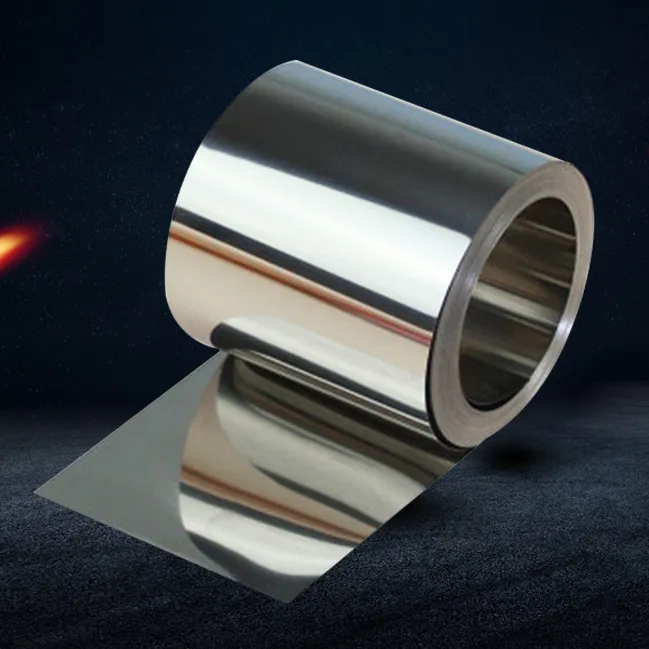
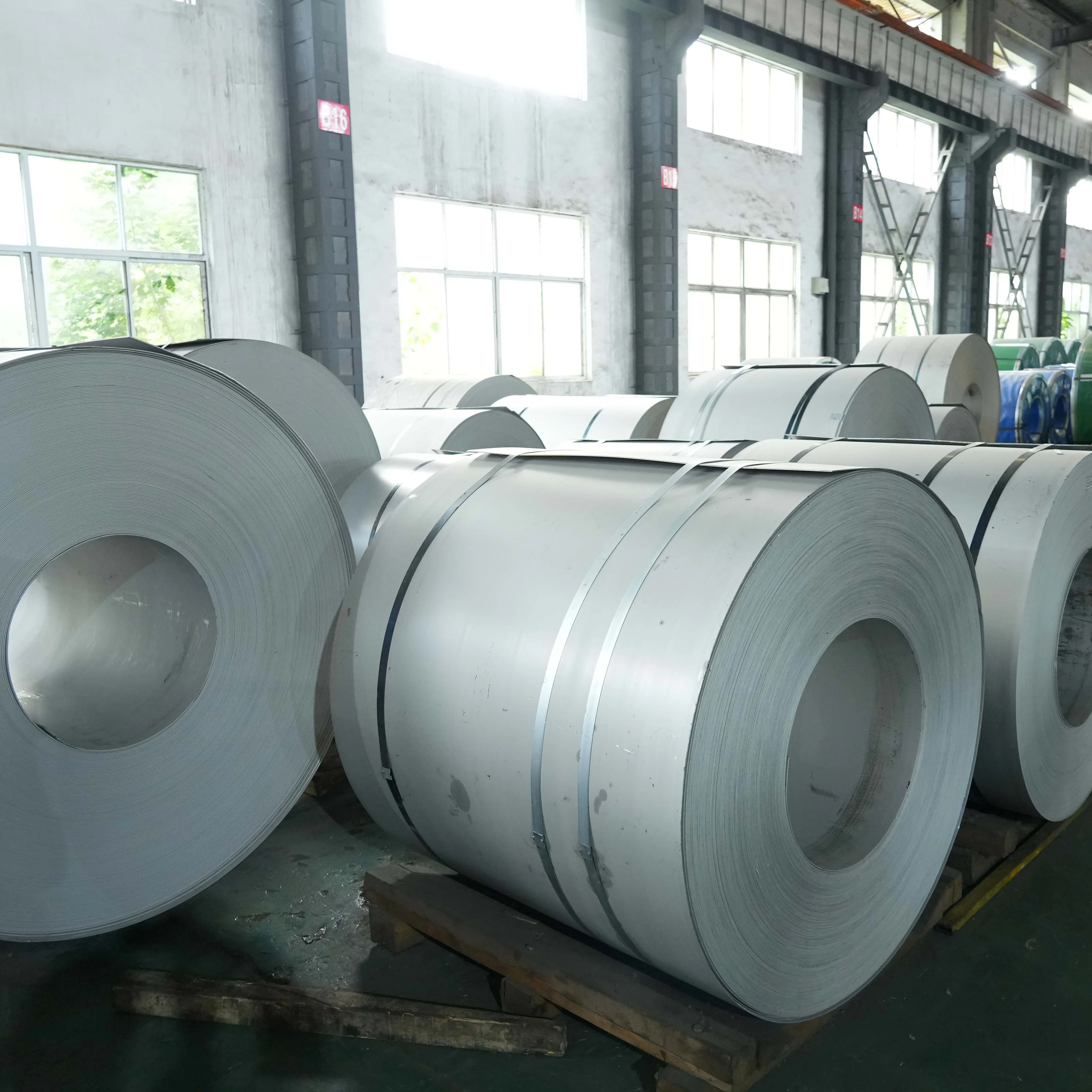
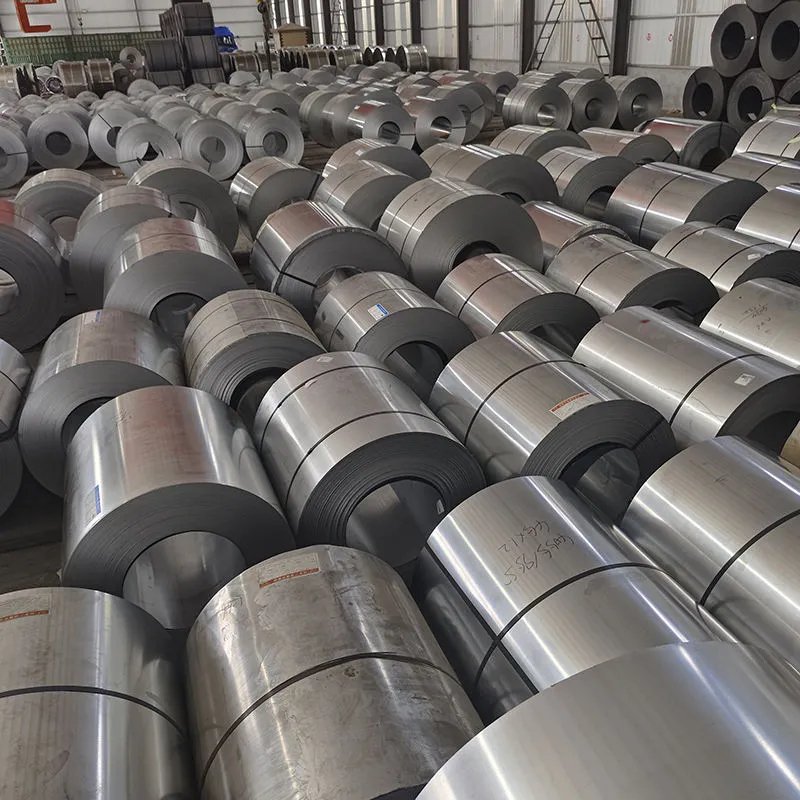
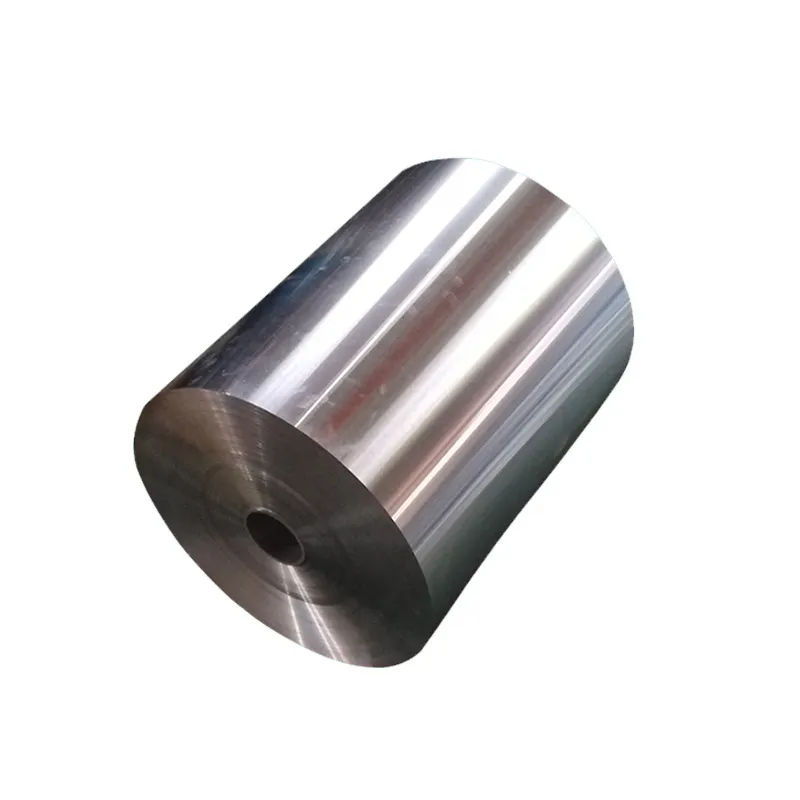
Stainless steel coils deliver superior corrosion resistance, high tensile strength, and lasting hygienic performance for specialized cable tray roll forming, chemical plant raceways, and offshore marine electrical enclosures. Precision cold rolled from premium austenitic alloy grades AISI 304, 304L, 316, and 316L, our stainless steel coils feature tight thickness tolerances, uniform mechanical elongation, and pristine surface finishes. Engineered to withstand harsh acid fumes, chloride saltwater mist, and continuous industrial sterilization, these coils guarantee zero rust contamination and permanent structural integrity across pharmaceutical, chemical, offshore, and cleanroom infrastructure projects.
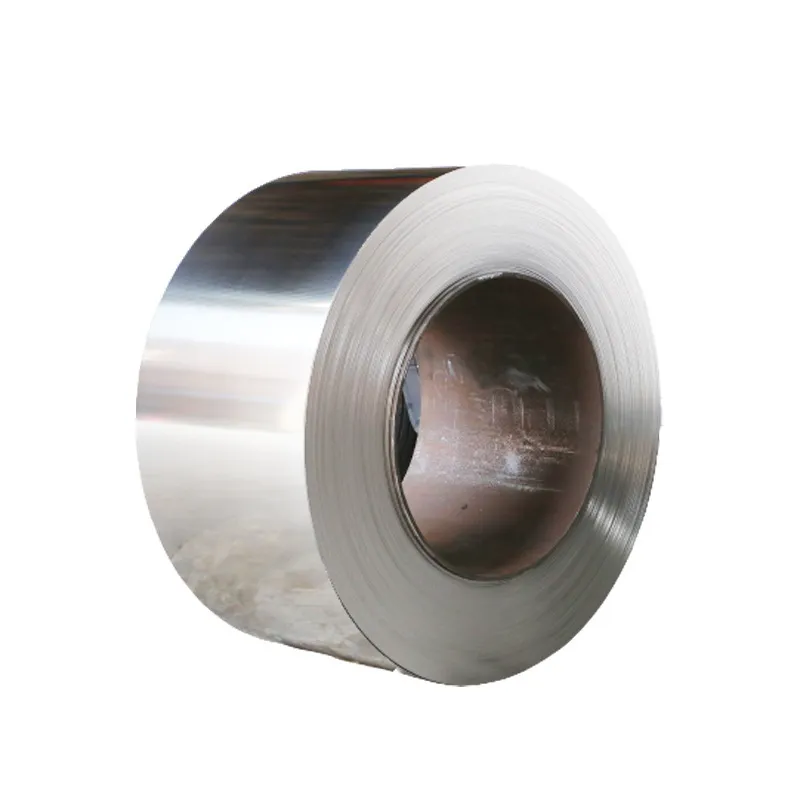 Direct Sales Stainless Steel Sheet IOn Coil Strip BA Surface 304 316 309S 430 Cold Hot Rolled Stainless Steel Coil Prices
- Shanghai, China+15-21 days+300 Series+ASTM+300 Series
$1,550.00
MOQ: 1
 Hot Sale 304 904L Stainless Steel Strips BA Surface 0.4 mm 0.8mm 2mm Cold Rolled Stainless Steel Coils Sheet
- Shanghai, China+15-21 days+300 Series+ASTM+300 Series
$1,550.00
MOQ: 1
 Customized AISI ASTM JIS SUS SS 201 304 316 Cold Rolled Stainless Steel Strip in Coil Manufacturer Hot Rolled
- Shanghai, China+15-21 days+300 Series / 400 Series / 200 Series+ASTM+300 Series, 301L, 301, 304N, 310S, 410, 204C3, 410S, 410L, 304, 304L, 304J1, 300 Series
$369.00
MOQ: 1
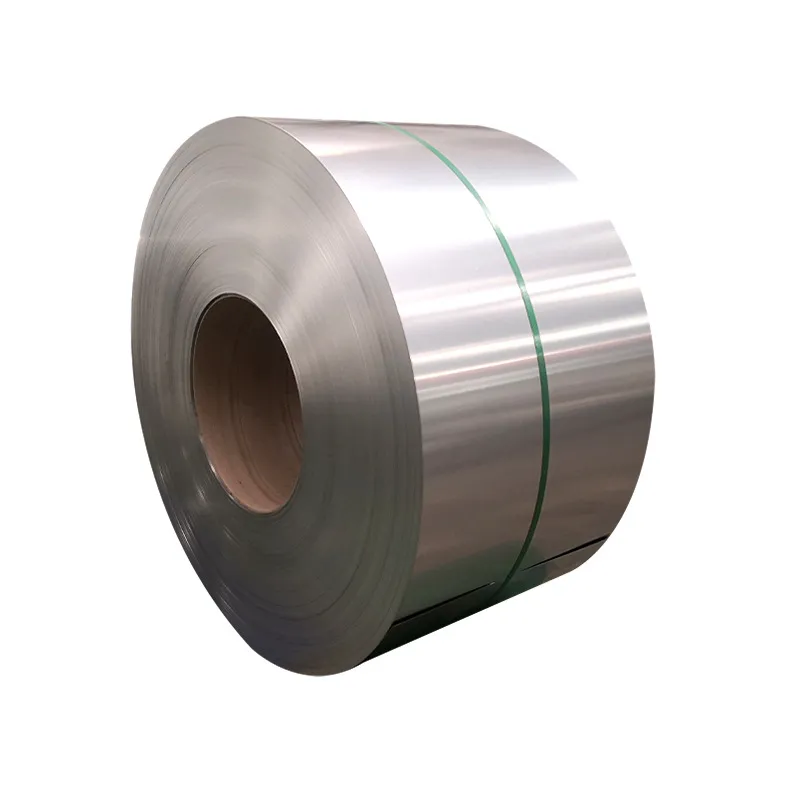 OEM 200 300 400 500 600 Series Seamless Stainless Steel Coil Cold Rolled 202 201 304 409 Hot-rolled Sus304 2b SS Coil Suppliers
- China+8 ~ 14 days+300 Series+AiSi+301L, 301, 304N, 310S, S32305, S30815, 410, 204C3, 316Ti, 316L, 441, 316, 420J1, L4, 321, 410S, 436L, 410L, 443, LH, L1, S32304, 314, 430, 347, 309S, 304, 439, 425M, 409L, 420J2, 204C2, 436, 445, 304L, 405, 370, S32101, 904L, 444, 301LN, 305, 429, 304J1, 317L
$829.00
MOQ: 1
 Direct Sales Stainless Steel Sheet IOn Coil Strip BA Surface 304 316 309S 430 Cold Hot Rolled Stainless Steel Coil Prices
- Shanghai, China+15-21 days+300 Series+ASTM+300 Series
$1,550.00
MOQ: 1
 Mirror Surface Stainless Steel Coil 430 201 304 316 409 316l 1.2mm Stainless Steel Hot Rolled Coil Strip
- Shanghai, China+15-21 days+300 Series+ASTM+300 Series
$1,550.00
MOQ: 1
 Stainless Steel Coil 300 Series AiSi Standard 2B Bending & Cutting Processing Service
- Shanghai, China+15-21 days+300 Series+AiSi+301, 304N, 310S, 301L, S30815
$899.00
MOQ: 1
 316Ti Stainless Steel Plate - High-Strength & Corrosion-Proof for Marine & Chemical Industry
- Shanghai, China+15-21 days+300 Series+AiSi+301, 304N, 310S, 301L, S30815
$399.00
MOQ: 1
 300 Series Stainless Steel Plate-2B Surface Finish 1% Tolerance AiSi Standard | Xiongji Brand for Marine & Chemical Industries
- Shanghai, China+15-21 days+300 Series+AiSi+301, 304N, 310S, 301L, S30815
$399.00
MOQ: 1
 420 / 1.4034 420 / 420C 1.4034 1.4034 (X46Cr13) SUS420J2 Stainless Steel Plate
- Shanghai, China+15-21 days+300 Series+AiSi+301, 304N, 310S, 301L, S30815
$399.00
MOQ: 1
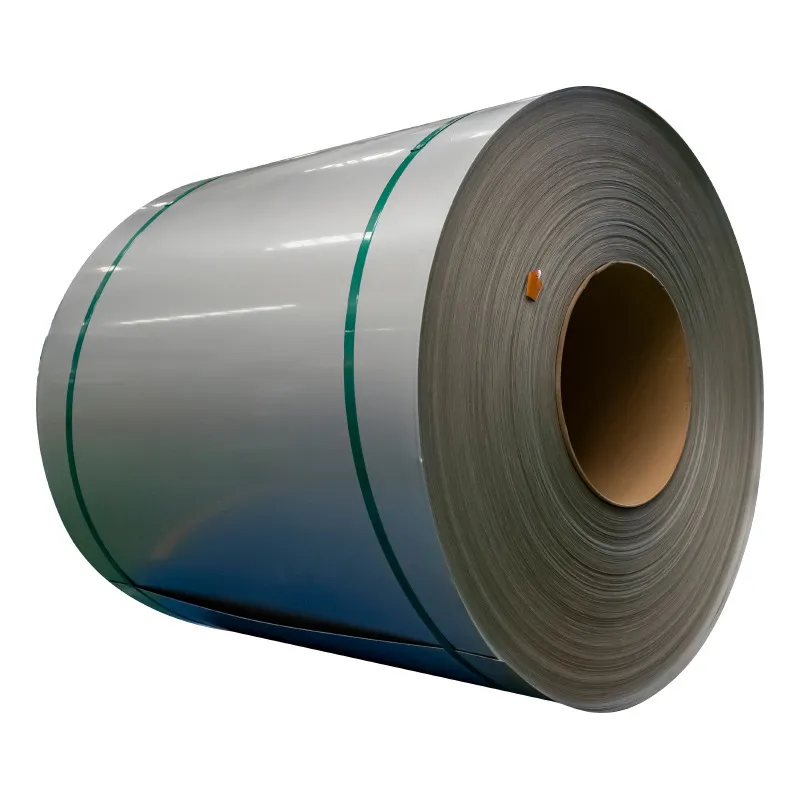 317L UNS S31703 1.4438 1.4438 SUS317L Stainless Steel Plate
- Shanghai, China+15-21 days+300 Series+AiSi+301, 304N, 310S, 301L, S30815
$399.00
MOQ: 1
 904L N08904 1.4539 1.4539 Stainless Steel Plate Ultra-low Carbon, High Ni, and Highly Corrosion Resistant
- Shanghai, China+15-21 days+300 Series+AiSi+301, 304N, 310S, 301L, S30815
$399.00
MOQ: 1
 304 1.4306 X2CrNi19-1 Stainless Steel Plates and Coils/strips.
- Shanghai, China+15-21 days+300 Series+AiSi+301, 304N, 310S, 301L, S30815
$399.00
MOQ: 1
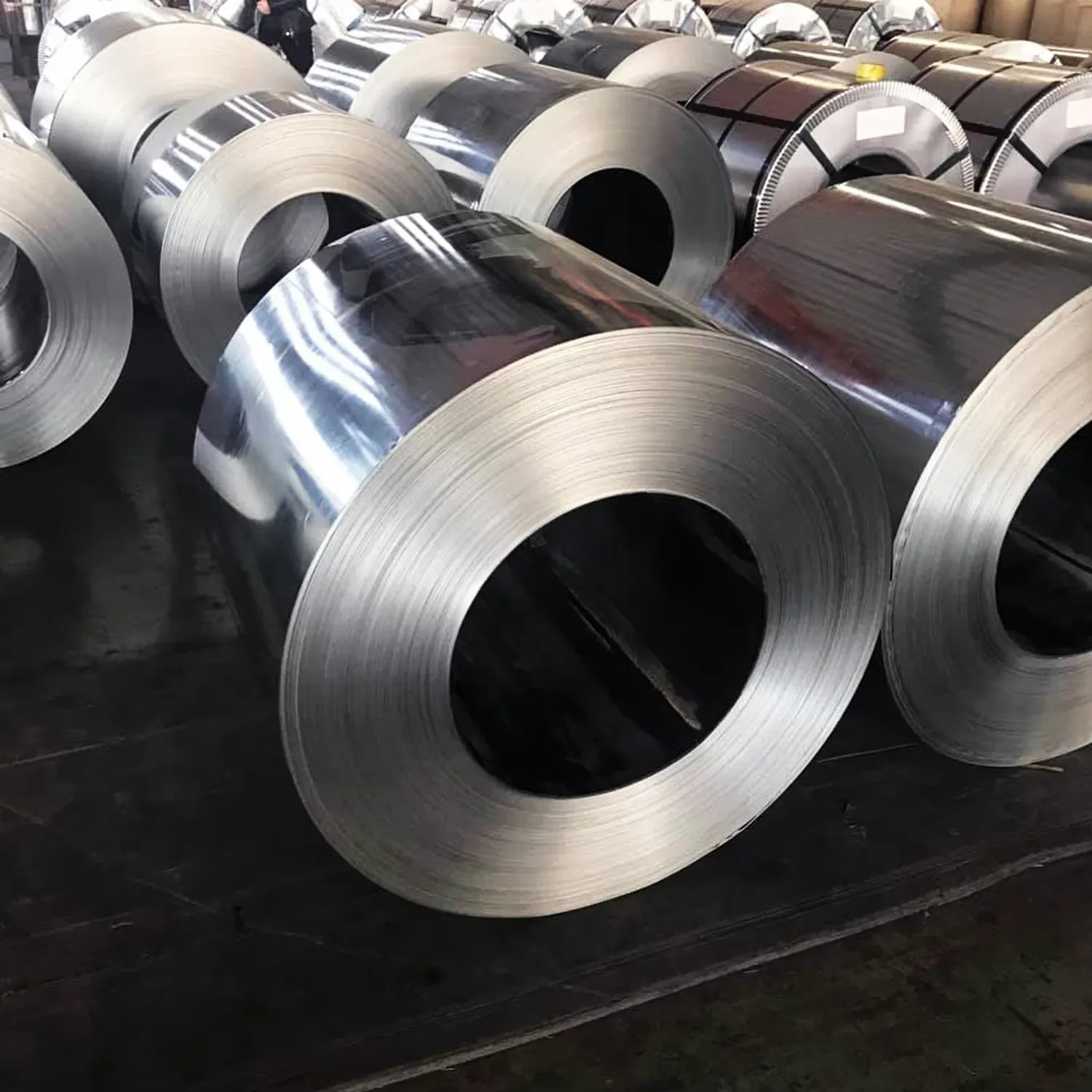 SUS405 1.4512 Stainless Steel Plate X2CrTi12 Automotive Exhaust and Auxiliary Heating Components
- Shanghai, China+15-21 days+300 Series+AiSi+301, 304N, 310S, 301L, S30815
$399.00
MOQ: 1
 304 Stainless Steel Coil High Corrosion Resistance 2B Surface Finish 1% Tolerance Custom Processing Services
- Shanghai, China+15-21 days+300 Series+AiSi+301, 304N, 310S, 301L, S30815
$560.00
MOQ: 100



About Stainless Steel Coils for Cable Tray & Marine Enclosures
Stainless steel coils represent the premier raw material choice for demanding cable management systems, architectural cladding envelopes, and specialized industrial enclosures operating in corrosive or sanitary environments. While galvanized steel relies on a sacrificial zinc coating that eventually depletes, stainless steel forms an instantaneous, self-healing chromium oxide passive film on its surface. When exposed to harsh chemical refinery atmospheres, offshore marine salt spray, or aggressive washdown sanitizers in food processing plants, stainless steel provides permanent, unyielding corrosion immunity.
Our stainless steel coil inventory focuses on austenitic grades AISI 304/304L (1.4301/1.4307) for general industrial and commercial facilities, and molybdenum-bearing AISI 316/316L (1.4401/1.4404) for marine offshore platforms, coastal water treatment facilities, and pharmaceutical cleanrooms. Molybdenum additions specifically inhibit chloride pitting and crevice corrosion, ensuring cable trays retain structural load-bearing capacity over decades.
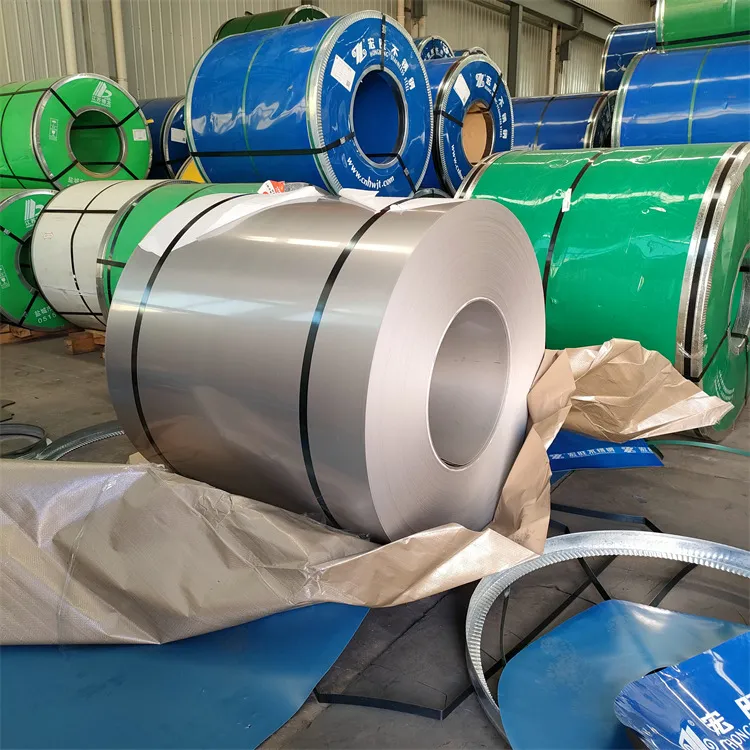
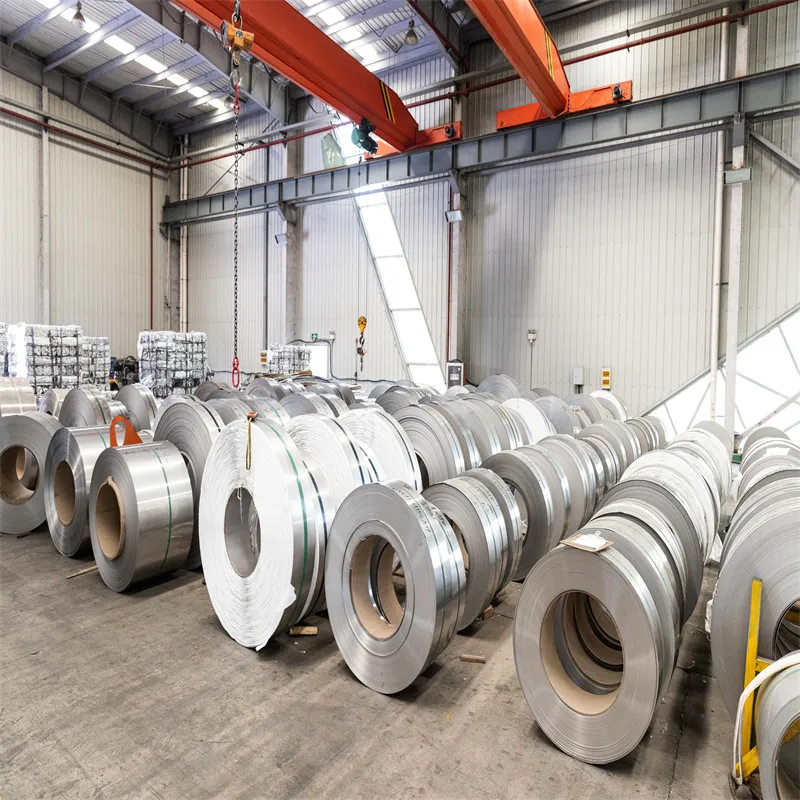
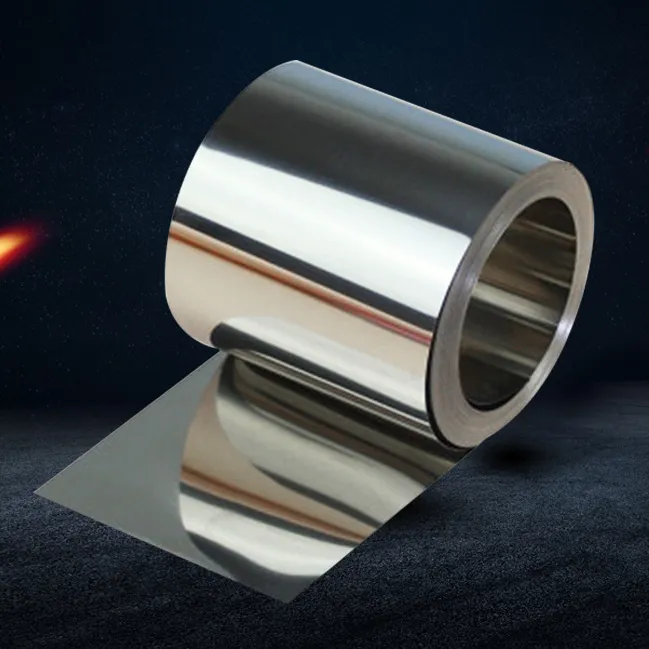
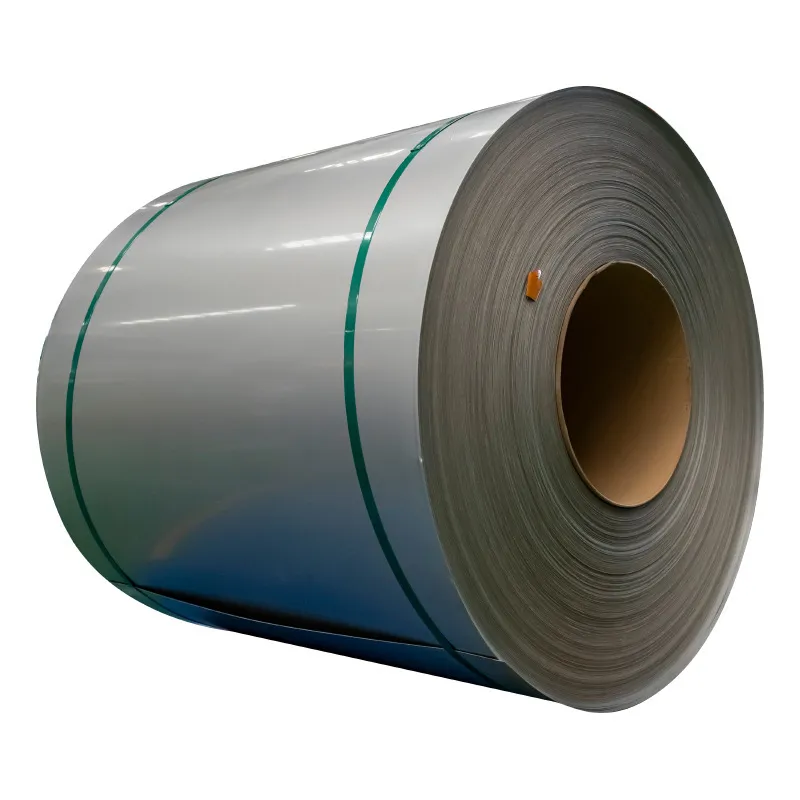
Available in standard 2B smooth cold-rolled, No.4 brushed architectural, and bright annealed (BA) surface finishes, each coil is precision slitted with burr-free edges and coated with protective laser PE film. Strict control over work-hardening exponents and yield ratios guarantees smooth, crack-free forming through multi-station roll forming lines, punching presses, and mechanical bending dies.
Applications
Offshore Marine Platform Stainless Cable Ladder Roll Forming
In offshore marine platform stainless cable ladder roll forming, forming marine-grade AISI 316L stainless steel cable ladder side rails and rungs for open sea oil drilling platforms and naval vessels. These rigid galvanized and stainless steel cable pathways provide superior structural span capacity, facilitate heat dissipation, and support high-voltage power networks.
Pharmaceutical & Cleanroom Sanitary Cable Tray Fabrication
In pharmaceutical & cleanroom sanitary cable tray fabrication, precision roll forming and stamping of AISI 304 stainless steel perforated cable trunking for cleanroom environments and biotech laboratories. Featuring high load-carrying capacity and modular hardware, these certified cable routing systems protect critical cabling while enabling organized overhead deployment.
Chemical Processing Plant Acid-Resistant Wireway Manufacturing
In chemical processing plant acid-resistant wireway manufacturing, cold rolling heavy 2.0mm 316L stainless steel sheet into sealed electrical wireway troughs for corrosive petrochemical refineries. Engineered with smooth edges and ventilation patterns, these modular cable raceways prevent insulation damage and ensure continuous electrical earth bonding.
Food & Beverage Processing Facility Washdown Cable Tray Profiling
In food & beverage processing facility washdown cable tray profiling, forming open-profile AISI 304 stainless steel wire mesh cable trays and perforated ducts designed for daily high-pressure chemical washdowns. These rigid galvanized and stainless steel cable pathways provide superior structural span capacity, facilitate heat dissipation, and support high-voltage power networks.
Coastal Desalination Plant Severe Salt-Spray Cable Raceway Forming
In coastal desalination plant severe salt-spray cable raceway forming, high-durability 316L stainless steel slit coils processed into heavy electrical cable support channels for coastal water desalination plants. Manufactured with advanced protective paint systems and tight dimensional tolerances, these master coils withstand severe outdoor weathering while enabling continuous production.
Technical Overview
| Parameter | Information |
|---|---|
| Stainless Steel Alloy Grades | Austenitic AISI 304, 304L (1.4301/1.4307); AISI 316, 316L (1.4401/1.4404) |
| Chemical Composition (304) | 18.0-20.0% Cr, 8.0-10.5% Ni, max 0.08% C (304L max 0.03% C), balance Fe |
| Chemical Composition (316) | 16.0-18.0% Cr, 10.0-14.0% Ni, 2.0-3.0% Mo (316L max 0.03% C), balance Fe |
| Thickness Gauge Range | 0.50 mm – 3.00 mm (precision gauge tolerance +/- 0.015 mm per ASTM A480) |
| Slit Width Capacity | 30 mm – 1250 mm (slitted with precision low-burr rotary slitter tooling) |
| Surface Finish Options | 2B (Cold Rolled Annealed & Pickled), No.4 Satin Brushed, BA (Bright Annealed) |
| Mechanical Yield Strength | Yield: >= 205 MPa (304), >= 220 MPa (316); Tensile: >= 520 MPa |
| Ductility & Elongation | Elongation at Break >= 40% (ensures crack-free 90° roll forming bends) |
| Surface Protective Film | Laser-Grade PE Protective Film (70–100 µm) with easy-peel adhesive |
| Manufacturing Standards | ASTM A240/A240M, EN 10088-2, JIS G4305, ISO 9001, CE Certified Material |
FAQ
When should Grade 316/316L stainless steel be chosen over Grade 304 for cable trays?
Grade 316/316L contains 2% to 3% molybdenum, providing superior resistance to chloride-induced pitting and crevice corrosion in marine coastal environments, chemical processing plants, and offshore oil platforms where 304 would suffer localized pitting.
How does cold roll forming work on work-hardening stainless steel coils?
Stainless steel exhibits higher work-hardening rates and tensile strength than carbon steel, requiring roll forming machines with 30% to 50% more motor torque, rigid tooling stands, and optimized progressive bending passes to avoid springback.
What surface finishes (2B, No.4, BA) are standard for stainless steel cable trays?
2B smooth cold-rolled finish is standard for industrial and commercial cable trays; No.4 satin brushed finish is specified for architectural visible areas; and BA (bright annealed) is preferred in sanitary food and pharmaceutical cleanrooms.
Why is protective PE/laser film applied to stainless steel slit coils?
Tough polyethylene protective film protects the pristine stainless steel surface from scratching, tooling scuff marks, and iron particulate contamination during high-speed roll forming, punching, and transit, easily peeling off after installation.
How do low-carbon grades (304L / 316L) prevent intergranular corrosion after welding?
Low-carbon grades contain maximum 0.03% carbon, preventing chromium carbide precipitation along grain boundaries during welding heat cycles, ensuring the welded cable tray joint maintains full corrosion resistance without post-weld annealing.
What international standards govern our stainless steel coil quality?
Our stainless steel coils conform strictly to ASTM A240/A240M, ASME SA240, EN 10088-2, and JIS G4305, accompanied by EN 10204 3.1 chemical and mechanical inspection certificates.
Can stainless steel cable trays cause galvanic corrosion when touching galvanized steel brackets?
Yes, direct contact between stainless steel and carbon or galvanized steel in moist environments creates galvanic couples that accelerate zinc/carbon steel corrosion; isolate dissimilar metals using nylon washers, EPDM pads, or stainless fasteners.