Global B2B Roll Forming Sourcing Platform | Free RFQ Response within 24h

- Tuo AI

- Live

- My Account
- Shopping Cart
- Inquiry Basket
- Contact Us
- Back to Top




Industrial Threaded Rods & All-Thread Studs
Engineered for high-tensile structural suspension and concrete embedment, our industrial threaded rods and all-thread studs deliver dependable mechanical fastening across commercial, industrial, and infrastructure projects. Available in metric (M6 to M36) and imperial diameters in lengths up to 3 meters, our continuous threaded bars are precision roll-threaded from carbon steels (Class 4.8, 8.8, 10.9, ASTM A193 B7) and stainless steels (SUS304/SUS316). Featuring uniform pitch tolerances, burr-free chamfered ends, and premium protective finishes including hot-dip galvanizing, zinc plating, and Dacromet, our threaded rods guarantee seamless nut engagement for MEP trapeze supports, seismic strut bracing, and heavy equipment anchoring.
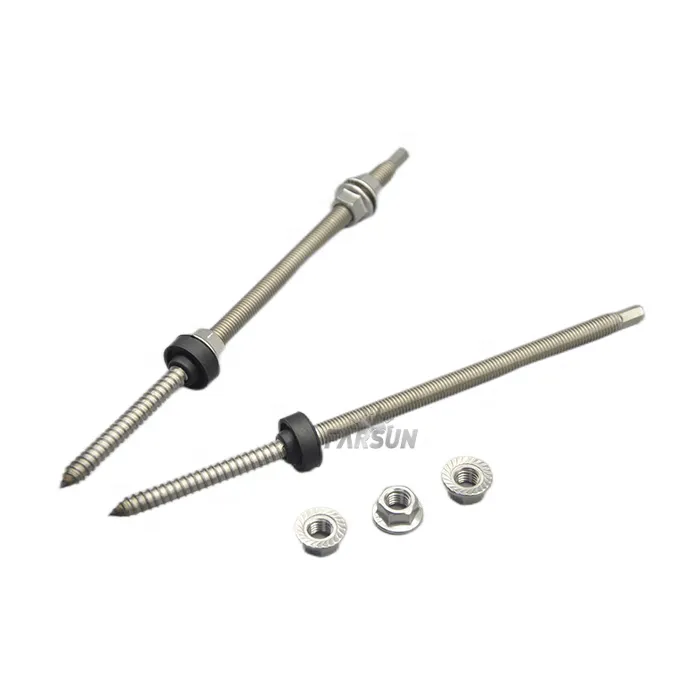 FarSun Double Threaded Bolt Hanger Roofing Bolt Roof Mounting Fastener
- Roof Mounting+0-45°+SUS304
$0.65
MOQ: 1
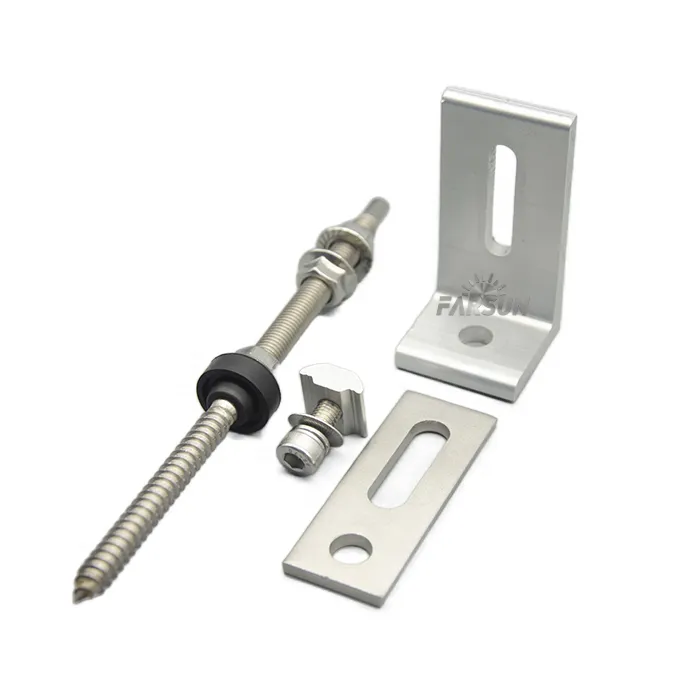 FarSun Pitched Roof Mounting System Threaded Screws Bolt Hanger
- Roof Mounting+0-45°+SUS304
$0.65
MOQ: 1
 FarSun Solar Roof Mounting Fastener Solar Hanger Bolts M10 Bolt Solar
- Roof Mounting+0-45°+SUS304
$0.65
MOQ: 1
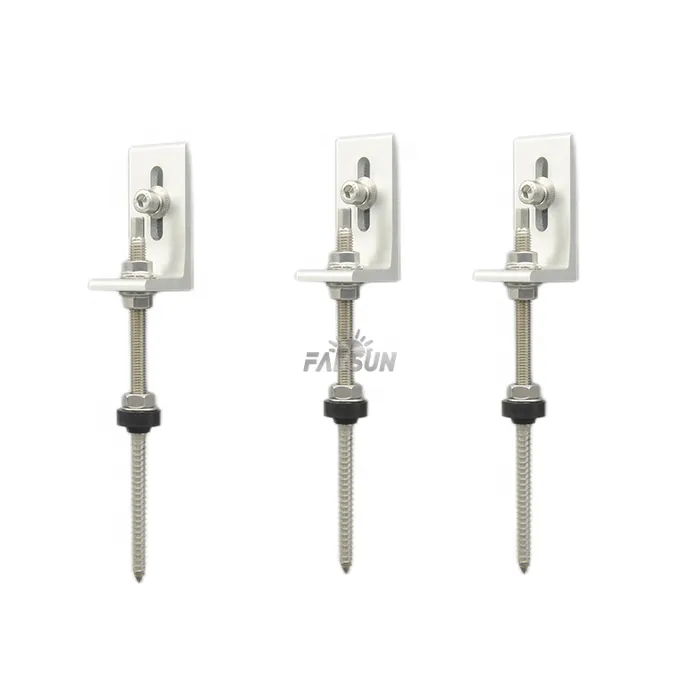 FarSun Roof Mounting Fastener Solar Hanger Bolt Brackets Roof Rack
- Roof Mounting+0-45°+SUS304
$0.65
MOQ: 1
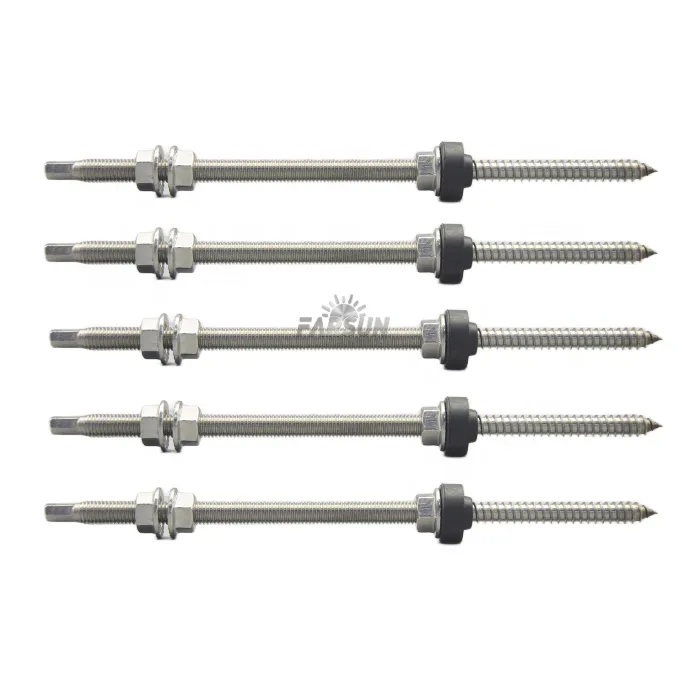 FarSun Wooden Thread M10 Hanger Bolt SUS304 for Solar Mounting
- Roof Mounting+0-45°+SUS304
$0.65
MOQ: 1
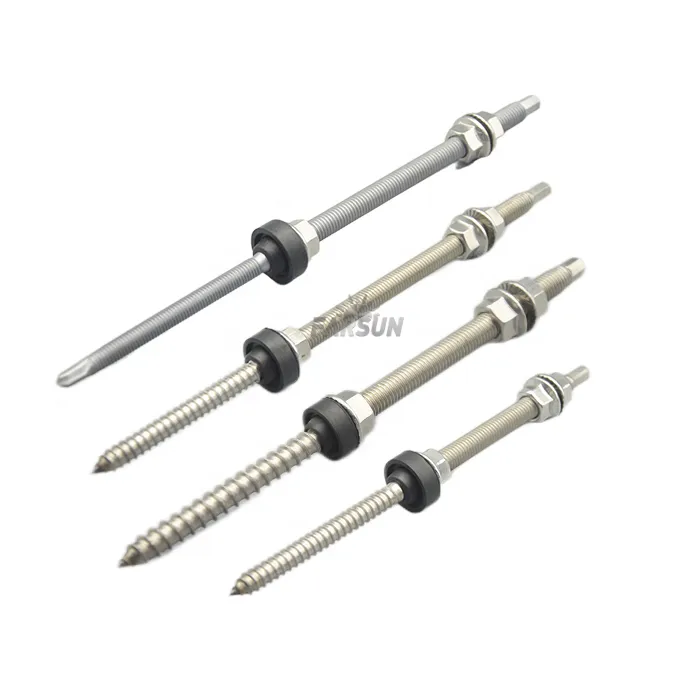 FarSun PV Mounting Systems SS304 Hanger Bolt M10 300mm SUS304 Hanger Bolt
- Roof Mounting+0-45°+SUS304
$0.65
MOQ: 1
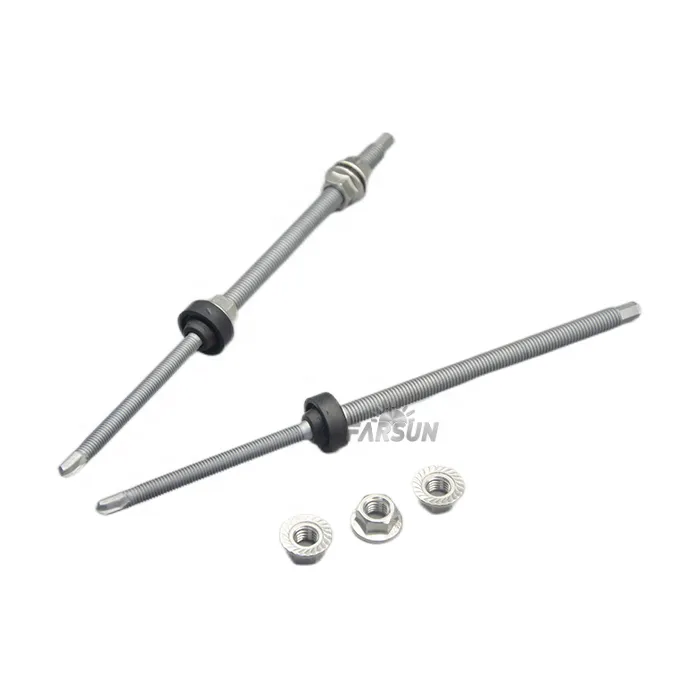 FarSun Solar Roof M10 Stainless Steel 304 Threaded Screws Hanger Bolt
- Roof Mounting+0-45°+SUS304/SUS410
$1.17
MOQ: 1
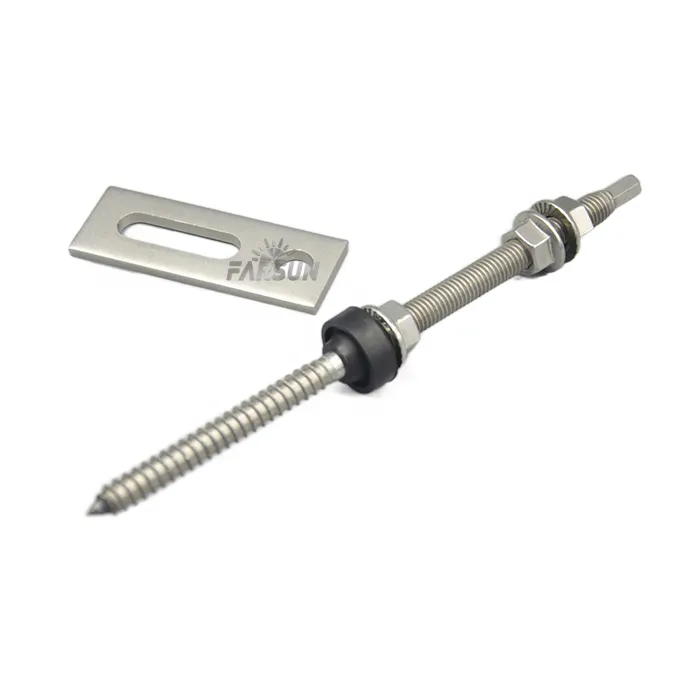 FarSun Metal Roof Solar Hanger Bolts 304 Threaded Wood Screw
- Roof Mounting+0-45°+SUS304/SUS410
$1.17
MOQ: 1
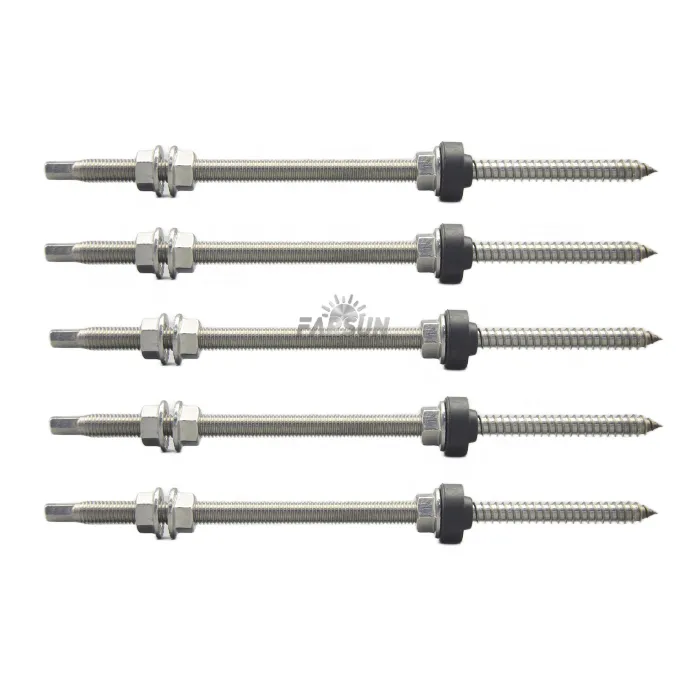 FarSun Solar Panel Tin Roof M10 Hanger Bolt M10X300mm
- Roof Mounting+0-45°+SUS304/SUS410
$1.17
MOQ: 1


Precision Continuous Roll-Threaded Structural Suspension Rods
Threaded rods—commonly referred to as all-thread rods, continuous threaded bars, or studding—serve as universal mechanical fasteners across industrial construction, HVAC mechanical piping, electrical raceway suspension, and structural steel tension bracing. Unlike cut-thread rods which sever metal grain structures and create micro-stress concentrations, our threaded rods are cold roll-threaded. This manufacturing process work-hardens the surface, burnishes thread flanks, and preserves continuous longitudinal metal grain flow, imparting up to twenty percent higher fatigue resistance and superior tensile load capacity under dynamic cycling.
Compliant with DIN 975, DIN 976, and ASTM A307/A193 standards, our extensive inventory covers general commercial suspension rods (Class 4.8, zinc plated), high-strength structural tie rods (Class 8.8 and 10.9, hot-dip galvanized or Dacromet coated), and petrochemical high-temperature alloy studs (ASTM A193 Grade B7 with Grade 2H heavy hex nuts). For marine, chemical processing, and wastewater facilities, austenitic stainless steel rods (A2-70 / A4-80) deliver unmatched resistance to pitting and chloride-induced stress corrosion. Each rod features precision chamfered ends that allow immediate, cross-thread-free engagement with standard hex nuts, coupling nuts, and drop-in anchor shells, streamlining field installations across high-volume building service runs and industrial facility frameworks. Strict thread pitch conformity, certified chemical analysis, and uniform tensile strength guarantee reliable load distribution across heavy industrial pipe racks, electrical substations, and architectural framing systems.
Applications
Overhead MEP Trapeze Strut Channel Pipe Suspension
In overhead mep trapeze strut channel pipe suspension, vertical suspension of multi-tier slotted strut trapeze frameworks supporting commercial mechanical piping and conduit runs. Manufactured to rigorous industrial tolerances from high-grade structural alloys, these dependable components withstand demanding environmental stresses and deliver certified reliability.
Commercial HVAC Ventilation Duct Ceiling Hanger Rod
In commercial hvac ventilation duct ceiling hanger rod, ceiling slab anchoring and vibration-isolated suspension of large rectangular HVAC sheet metal ventilation ducts. These high-strength self-drilling screws, blind rivets, and heavy anchor bolts provide rigid, vibration-resistant connections between metal framing and building foundations.
Data Center Cable Runway Overhead Threaded Rod Support
In data center cable runway overhead threaded rod support, high-density overhead wire mesh cable tray suspension using high-tensile threaded rod drop assemblies above server racks. Featuring tight dimensional pitch tolerances and secure locking mechanisms, these structural racking members support multi-tier storage loads safely and reliably.
Structural Steel Tie Rod Cross Bracing Tensioning
In structural steel tie rod cross bracing tensioning, diagonal high-strength Grade 8.8 tie rod bracing with clevis ends providing lateral wind stability in steel portal frames. Manufactured to rigorous industrial tolerances from high-grade structural alloys, these dependable components withstand demanding environmental stresses and deliver certified reliability.
Warehouse Pallet Rack Baseplate Concrete Epoxy Tie Rod
In warehouse pallet rack baseplate concrete epoxy tie rod, high-embedment chemical anchoring of heavy-duty pallet rack upright column baseplates into industrial slab floors. These precision roll-formed upright and beam profiles deliver maximum vertical space utilization, rigid seismic resistance, and dependable high-density pallet storage.
Technical Overview
| Parameter | Information |
|---|---|
| Standards & Specifications | DIN 975, DIN 976-1 (Type A/B), ASTM A193 (B7/B8), ASTM A307 |
| Strength Classes / Grades | Class 4.8, 6.8, 8.8, 10.9, 12.9; ASTM A193 Grade B7; A2-70, A4-80 |
| Thread Diameter Range | Metric: M6 to M36 (M42 on request); Imperial: 1/4 in to 1-1/2 in UNC/UNF |
| Thread Form & Pitch | Metric Coarse Thread (ISO 965-1), UNC/UNF Unified National Coarse/Fine |
| Standard Cut Lengths | 1000 mm (1m), 2000 mm (2m), 3000 mm (3m), 12 ft (Custom cut lengths) |
| Thread Manufacturing | Cold Roll-Threaded (Burnished Flanks, Continuous Grain Flow) |
| Surface Coatings | Bright Zinc Plated (Cr3+), Hot-Dip Galvanized, Dacromet, Plain Oiled |
| Stainless Steel Options | AISI 304 (A2), AISI 316 (A4 Marine Grade), Passivated Surface |
| Tensile Strength Range | 400 MPa (Class 4.8) up to 1040 MPa (Class 10.9 / ASTM A193 B7) |
| Packaging Standards | Bundle Wrapped with Heavy Polyethylene Bagging, Wooden Crate Protection |
FAQ
What is the difference between cold roll-threaded and cut-threaded rods?
Roll-threaded rods are formed by extruding round bar between rotary dies under extreme hydraulic pressure, displacing metal without cutting fibers. This burnishes thread flanks, eliminates micro-burrs, and work-hardens the thread root, yielding 15-20% higher tensile strength and fatigue life compared to cut-threaded rods, which sever the metal grain.
Which strength class should be selected for overhead MEP trapeze hangers?
Class 4.8 zinc-plated threaded rod is the standard worldwide choice for lightweight to medium HVAC ducting, cable trays, and plumbing trapezes. For heavy fire sprinkler mains, chilled water lines, or seismic restraint trapezes, structural engineers specify high-tensile Class 8.8 or ASTM A193 Grade B7 rods to guarantee code-compliant safety margins.
Can threaded rods be used with chemical adhesive anchoring in concrete?
Yes. Class 5.8, 8.8, and stainless steel A4 threaded rods are commonly cut to stud lengths with a 45-degree chisel point on the embedded end and used with vinylester or epoxy chemical injection mortars in cracked and uncracked concrete foundations.
How does hot-dip galvanizing affect threaded rod nut engagement?
Hot-dip galvanizing deposits a 45-55 micron zinc layer that increases effective thread pitch diameter. To ensure free nut spinning, mating hex nuts must be tapped oversize (+0.4mm to +0.5mm, designated 6AZ or 6AX fit), or the threaded rods must be spun through a high-speed centrifuge immediately upon molten withdrawal.
What are ASTM A193 B7 threaded rods used for?
Grade B7 rods are manufactured from heat-treated chromium-molybdenum alloy steel (AISI 4140/4142) quenched and tempered to achieve a minimum tensile strength of 860 MPa (125 ksi). They are engineered for high-pressure, high-temperature flange connections in oil refineries, steam pipelines, and power plants.
How do you connect two lengths of threaded rod together in the field?
Threaded rod lengths are joined end-to-end using heavy hex coupling nuts (DIN 6334) with internal inspection witness holes. Both rods must thread into the coupling nut by at least 1.5 times the nominal thread diameter to achieve 100% full tensile load transfer.
What are the best cutting practices to prevent thread damage on job sites?
Use a clean metal cold-saw or threaded rod shear. Prior to cutting with an angle grinder, spin a hex nut onto the rod past the cut line; after cutting and chamfering the rod end with a deburring cone, unscrew the nut outward to cleanly re-form the lead thread.