Global B2B Roll Forming Sourcing Platform | Free RFQ Response within 24h

- Tuo AI

- Live

- My Account
- Shopping Cart
- Inquiry Basket
- Contact Us
- Back to Top




Hydraulic Roof Curving Machines
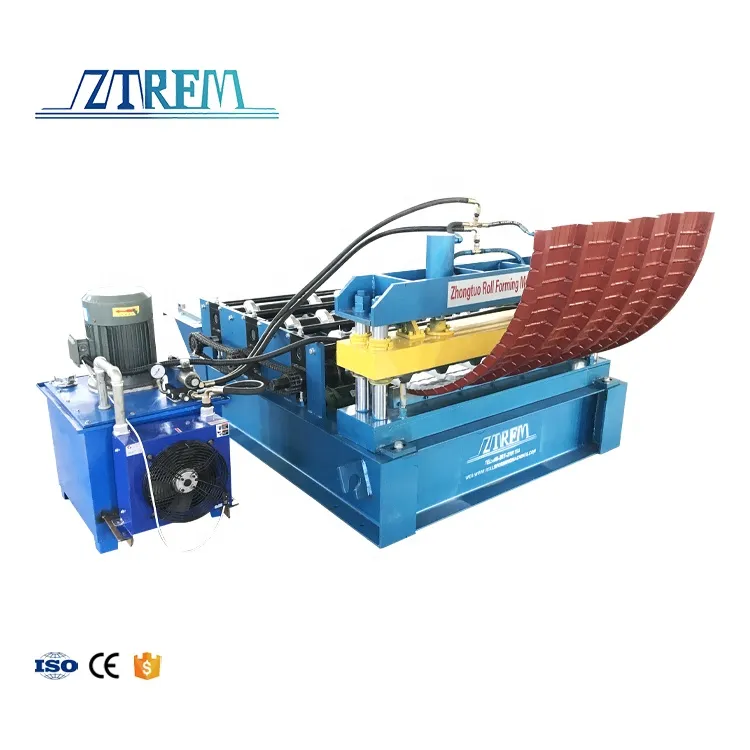
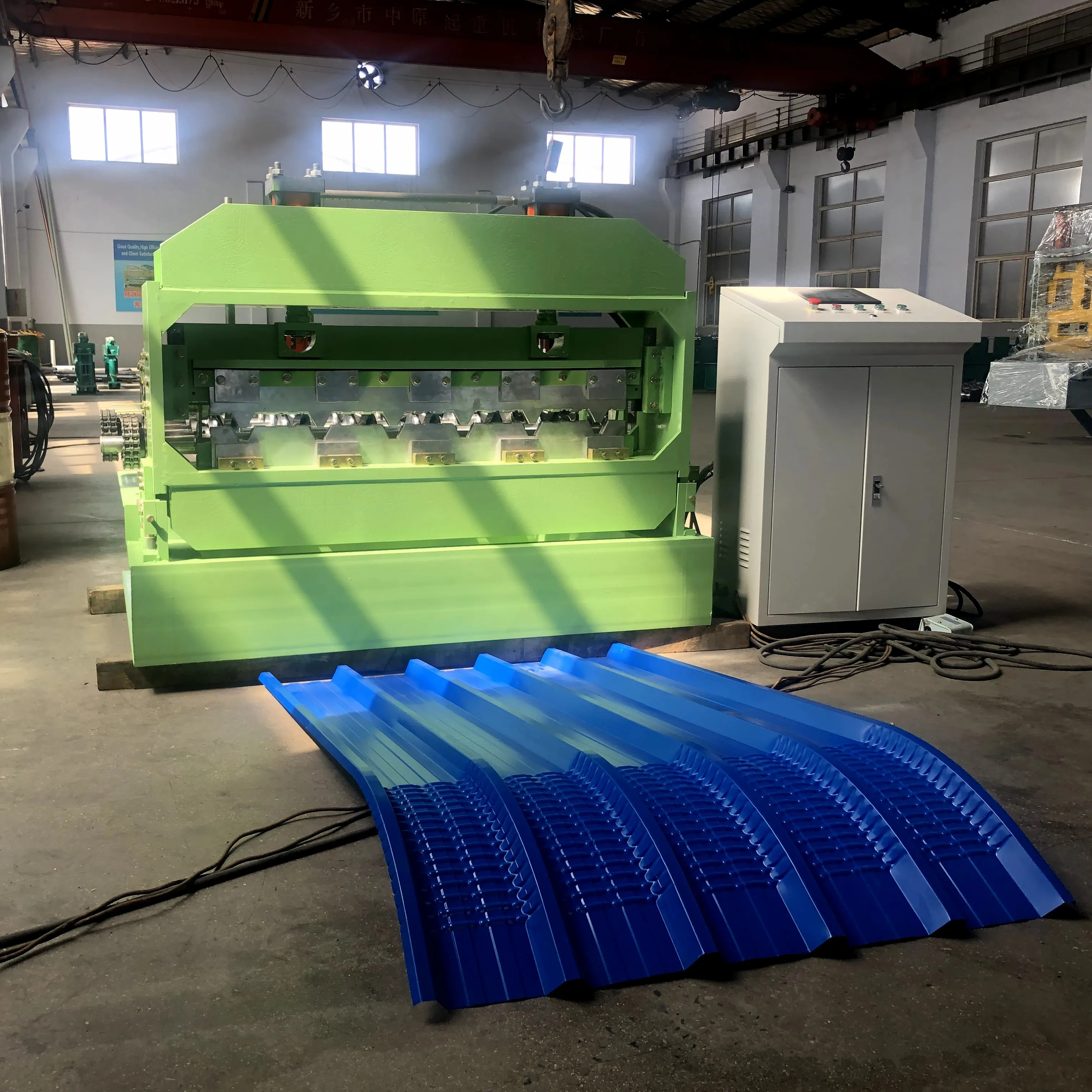
Hydraulic roof curving machines (also designated metal sheet crimp curvers or arched roof curving roll formers) precisely bend straight roll-formed trapezoidal and corrugated steel panels into smooth architectural arches, barrel vaults, and bullnose eaves. Engineered to process prepainted galvanized steel (PPGI), galvalume, and aluminum profiles (0.3 mm to 1.0 mm thick), these specialized machines utilize either hydraulic step-crimping molds or continuous multi-roll curving tooling. Controlled via CNC touchscreen interfaces that adjust crimp spacing and hydraulic pressure, operators can form precise curvature radii down to 500 mm with zero paint cracking or web deformation. Explore verified machine specifications, tooling profiles, and factory direct quotations below.
 IBR Roof Sheet Machine Metal Arch Roofing Curving 3kw
- Other+3 kw
$5,000.00
MOQ: 1
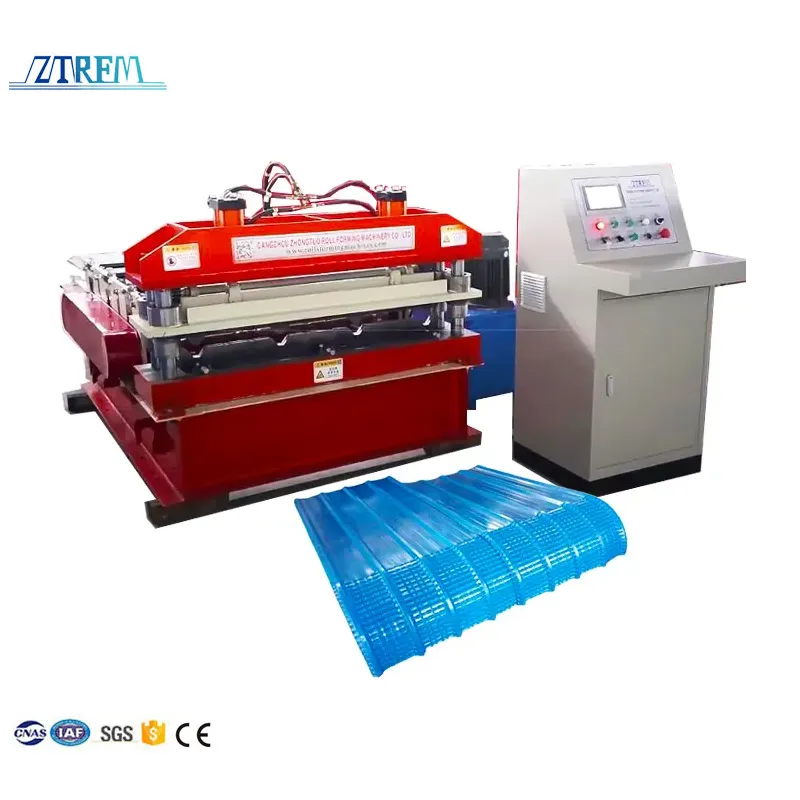 Metal TR4 Roofing Sheet Crimping Machine Curving Machine Metal
- 0-10m/min+5.5kw
$6,000.00
MOQ: 1
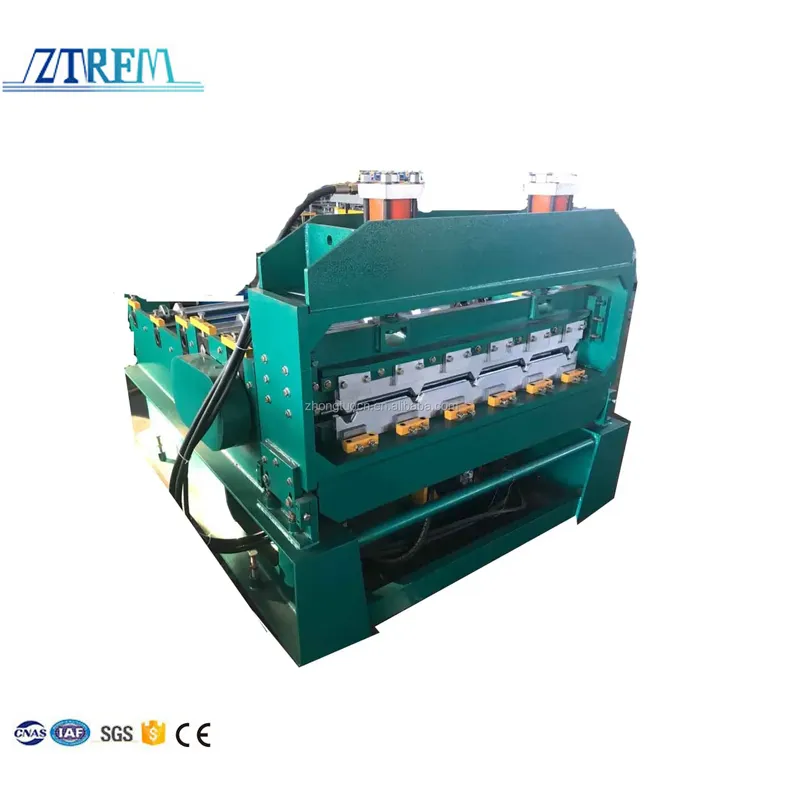 Metal Roof Panel Bend Machine Steel Metal Bending Machine
- 15 m/min+8kw
$7,000.00
MOQ: 1
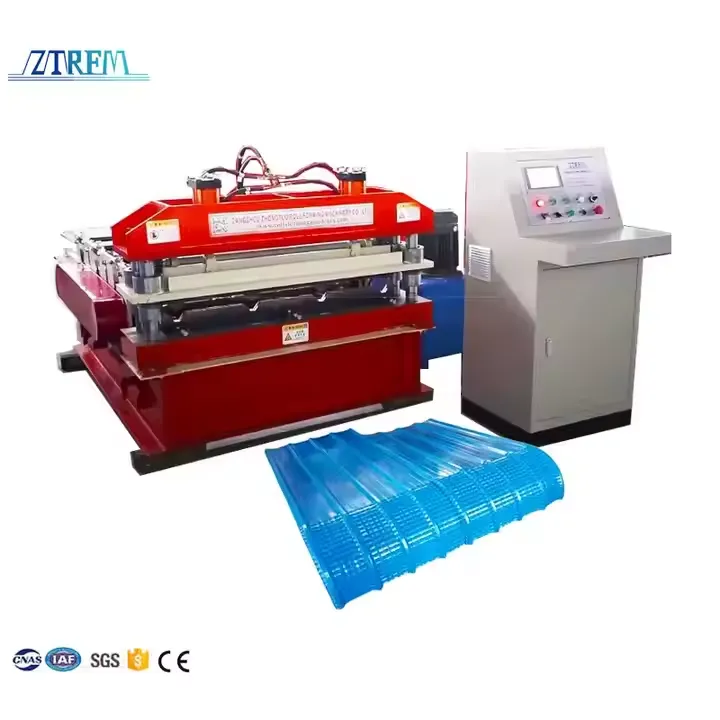 Metal Roofing Panel Crimping Curving Machine Tile Forming Machine
- ZTRFM-C1+5.5kw+15 m/min
$6,000.00
MOQ: 1
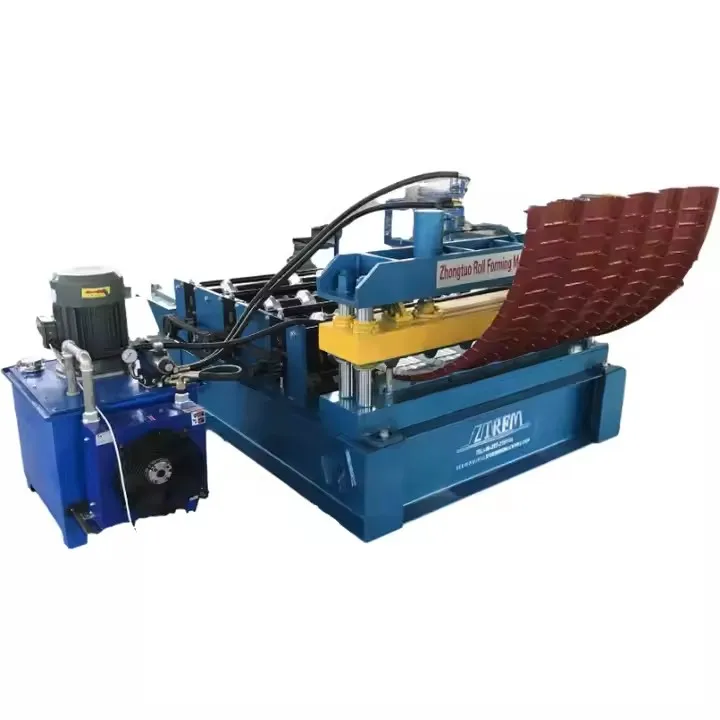 Metal Steel Trapezoidal Roofing Sheet Curving Roll Forming Machine
- Other+curve+3 kw
$7,000.00
MOQ: 1
 Automatic High Precision Metal Roof Panel Arch Bending Curving Crimping Machine for Structural Roof Roll Forming Line
- ZTRFM-curving machine
$6,750.00
MOQ: 1


About Hydraulic Roof Curving Machines
Hydraulic roof curving machines represent essential secondary metal forming equipment in modern architectural metal construction, structural steel fabrication, and canopy manufacturing. While standard roll forming machines produce straight longitudinal panels, contemporary architectural designs increasingly specify curved building elements—such as arched sports arenas, curved aircraft hangars, barrel-vaulted walkway canopies, grain storage domes, and transitional bullnose eaves wrapping from roof to wall without gutters.
Two primary curving technologies dominate the industry: hydraulic crimp curving and continuous roll curving. Hydraulic crimp curving machines utilize a profiled horizontal blade and anvil matching the cross-section of the pre-formed roofing sheet. As the sheet is fed forward in discrete steps by motorized rubber rollers, hydraulic cylinders press precise transverse micro-creases into the profile ribs. By varying the distance between successive crimps (typically 20 mm to 80 mm) and crimp depth, operators can produce circular curves, parabolic arches, S-curves, and straight-curve-straight transitional panels without damaging color coatings.
Continuous roll curving machines, conversely, utilize a pyramid of three or four contoured roller shafts that apply continuous bending moment to shallow corrugated or sinusoidal sheets, delivering mirror-smooth curvature ideal for cylindrical silo walls and gentle architectural barrel roofs. Equipped with digital touchscreens for automated radius programming, mobile trailer-mount options for on-site operation, and rugged hydraulic power units, these machines allow roofing contractors to fabricate custom curved panels on demand.
Applications
Aviation Aircraft Hangar Barrel-Vaulted Metal Roofs
In aviation aircraft hangar barrel-vaulted metal roofs, continuous arched trapezoidal steel panels curved to span large-radius barrel vault aircraft hangars without intermediate structural purlin supports. These high-tensile C and Z purlins provide lightweight secondary structural framing across wide bays, supporting heavy corrugated metal roof and wall cladding.
Sports Stadium Grandstand Cantilevered Curved Canopies
In sports stadium grandstand cantilevered curved canopies, smooth crimp-curved prepainted metal roof sheets forming architectural cantilevered spectator canopy roofs for modern outdoor athletic stadiums. Manufactured from heavy-gauge galvanized steel, these architectural door profiles deliver tight air-seal closure, high impact resistance, and compliant life-safety performance.
Commercial Pedestrian Walkway Arched Canopies
In commercial pedestrian walkway arched canopies, curved color-coated corrugated steel panels providing weather-protected arched canopies over airport transit concourses and commercial shopping promenades. Engineered with anti-capillary side-laps and continuous structural ribs, these precision roll-formed metal panels deliver leak-proof weather-tightness and withstand hurricane-force wind uplift.
Agricultural Clear-Span Grain Storage Arched Domes
In agricultural clear-span grain storage arched domes, self-supporting curved galvanized roof panels assembled into high-capacity arch structures for bulk grain storage, resisting moisture and wind loads. These durable architectural roof and wall cladding profiles provide exceptional corrosion resistance, protecting industrial facilities from severe weather while delivering modern aesthetics.
Architectural Bullnose Eaves Roof-to-Wall Transitions
In architectural bullnose eaves roof-to-wall transitions, precision 90-degree curved bullnose metal panels transitioning continuously from pitched roof to vertical wall facade with zero leaky gutter joints. These durable rainwater profiles integrate seamlessly with modern rooflines, providing long-term weather-tight drainage performance and protecting buildings from moisture intrusion.
Technical Overview
| Parameter | Information |
|---|---|
| Machine / Product Family | Hydraulic metal roof sheet crimp curver & roll curving line |
| Applicable Panel Materials | Prepainted steel (PPGI), galvalume (GL), structural aluminum coils |
| Material Thickness Range | 0.30 mm – 0.80 mm (standard); up to 1.00 mm for heavy-duty models |
| Applicable Panel Widths | Effective width 600 mm – 1050 mm (customized to matched profile) |
| Curving Mechanism | Hydraulic reciprocating crimping blade & anvil (Cr12MoV tool steel) |
| Curvature Radius Range | Minimum radius 500 mm – 800 mm to continuous open arch radii |
| Infeed Drive System | Motorized polyurethane drive rollers with encoder step positioning |
| Hydraulic Power Unit | 5.5 kW – 11 kW heavy hydraulic station with oil cooling system |
| Production Curving Speed | 8 – 15 m/min (depending on crimp pitch density and arch radius) |
| CNC Controller & Automation | PLC touchscreen controller with automated multi-radius programming |
Related Solutions
Arch Roof & Warehouse Building Solution
An “arch roof” search usually means one of four hosts: a jobsite K-span that for…
Metal Roofing & Wall Panel Roll Forming Solution
Trapezoidal / IBR, standing-seam, corrugated or glazed-tile roof and wall panel…
Roof Panel and Wall Panel Combined Line
Combined line for standing seam roof and wall panels. Quick tooling change betwe…
Standing Seam Roofing Project Solution
A standing-seam project is a shop mill that forms lock legs, plus an on-roof sea…
Wide-Format Roofing Production Solution
Buyers type “3 m roofing” for four different jobs: a 3 m cut length on a roof mi…
Pre-Engineered Building Component Line
Integrated solution for PEB secondary framing: C/Z purlins, girts, eave struts,…
Related Information

What Is Cold Roll Forming? The Complete Technical Guide (2026)
Learn what cold roll forming is, how the process works, typical applications, an…
Read More
Cold Formed Steel vs Hot Rolled Steel: What Roll Forming Buyers Need to Know
Yield strength, ductility, surface finish, tolerances — a practical comparison o…
Read More
Roll Forming Decoiler Types: Manual, Hydraulic and Double-Head Guide
Manual vs hydraulic vs double-head decoilers — capacity, safety, price, and how…
Read More
The Mechanics of Bending: Why Metal Flows Instead of Breaking
A roll forming line never cuts or cracks the strip—it persuades it to flow. A lo…
Read More
Cold Roll Forming Process for Metal Roofing: From Coil to Roof Sheet
cold roll forming process metal roofing, roof sheet roll forming process, how ro…
Read More
Corrugated Roof Sheet Machine: Profiles, Specs and How to Choose One
sinusoidal profiles, real specs, standard vs drum-type lines, speed units explai…
Read More
FAQ
What is the difference between hydraulic crimp curving and continuous roll curving?
Hydraulic crimp curving utilizes a hydraulic blade to press discrete transverse indentations along panel ribs, allowing high-rib trapezoidal panels to bend to tight radii without web buckling. Continuous roll curving utilizes rotating contoured rollers to bend panels continuously, ideal for shallow corrugated sheets and smooth wide arches.
What minimum bending radius can be achieved on a hydraulic roof curving machine?
Minimum bending radius depends on panel rib height and sheet thickness. Standard trapezoidal sheets (e.g., 25–38 mm rib depth) can achieve a minimum crimp radius of 500 mm to 800 mm. Shallow corrugated sheets can curve down to 300 mm radius on continuous roll curving units.
Can the machine curve panels with both straight and curved segments on a single sheet?
Yes. Programmable CNC controllers allow operators to produce bullnose panels with a straight upper roof run, a smooth curved transition radius at the eaves (e.g., 90° bend), and a straight vertical drop down the wall, eliminating leaky horizontal gutter joints.
Does crimp curving damage or chip the painted finish on color-coated PPGI coils?
No. Crimp blades and dies are machined from high-grade alloy tool steel (Cr12MoV), polished smooth, and radiused to prevent sharp pinching. The controlled hydraulic pressing stroke applies gentle coining pressure that maintains complete paint adhesion on quality coils.
What sheet profiles are compatible with hydraulic roof curving machines?
Machines accommodate standard trapezoidal profiles (such as 840, 820, 750, 900), sinusoidal corrugated wave sheets, and standing seam panels. Curving dies are interchangeable, allowing one machine base to process multiple profile types.
Can hydraulic curving machines be mounted on mobile trailers for jobsite curving?
Yes. Mobile trailer-mounted curving machines with integrated diesel generators or electric power packs are widely deployed to curve long roof panels directly at construction sites, eliminating the challenge of transporting delicate curved sheets over public roads.
What parameters should buyers verify when sourcing a roof curving machine?
Buyers should provide exact cross-sectional drawings of the roll-formed profile to be curved, maximum sheet thickness (typically 0.4–0.8 mm), target minimum curvature radius, feed drive type (servo or pneumatic), and hydraulic station power capacity.