Global B2B Roll Forming Sourcing Platform | Free RFQ Response within 24h

- Tuo AI

- Live

- My Account
- Shopping Cart
- Inquiry Basket
- Contact Us
- Back to Top




Solar Rail Sliding Blocks & Strut Channel Nuts
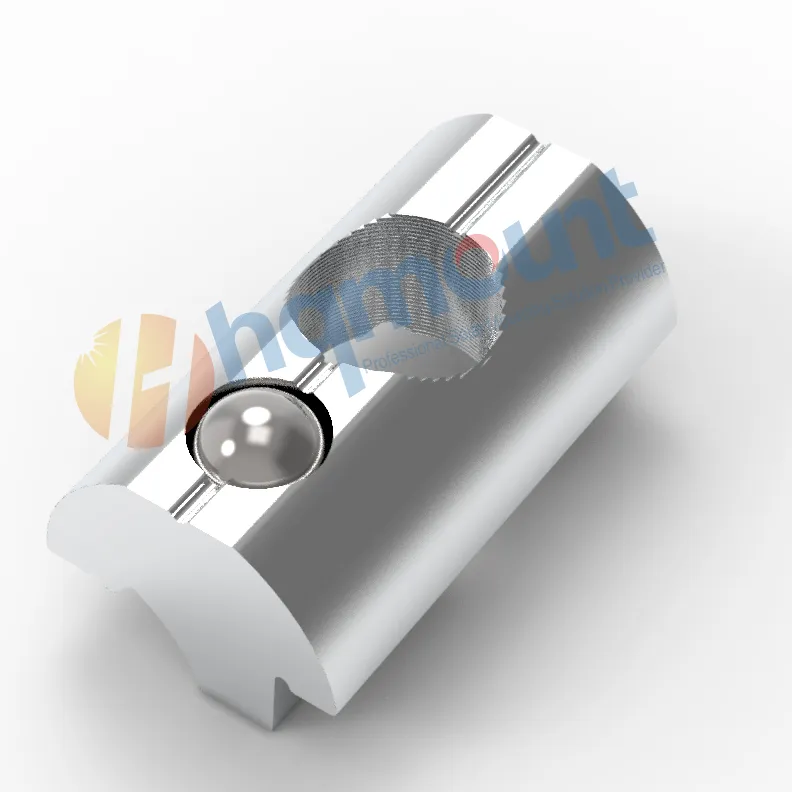
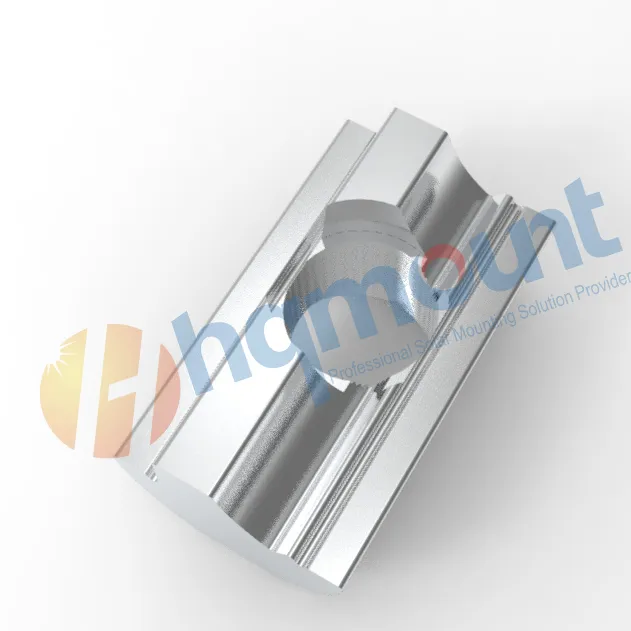
Solar rail sliding blocks and channel nuts provide heavy-duty, rapid-locking threaded anchor points within extruded aluminum mounting rails and cold formed steel strut channels. Manufactured from precision-machined AL6005-T5 aluminum, case-hardened zinc-plated carbon steel, and SUS304 stainless steel alloys, these versatile fasteners feature chamfered rhomboid, hammer-head, and captive spring geometries. Designed for smooth slot insertion and automatic 90-degree rotational locking under bolt torque, our sliding nuts guarantee high pull-out resistance and vibration security across utility-scale solar farms, commercial rooftops, and tracking systems.
About Solar Rail Sliding Blocks & Strut Channel Nuts
Sliding blocks—also known as channel nuts, T-nuts, or rail slide nuts—are foundational mechanical clamping elements in modular solar photovoltaic mounting systems. Connecting mid clamps, end clamps, L-feet, and structural brackets to extruded aluminum rails or roll formed C-channel strut posts requires internal threaded anchors that can be positioned flexibly along the entire rail length without pre-drilling or dismantling.
Our sliding blocks are engineered with specialized self-aligning geometries. During installation, the block drops directly into the top rail slot at any point; as the M8 clamp bolt is tightened, the nut rotates 90 degrees until its precision-milled shoulder stops firmly against the internal channel lips. Serrated groove teeth machined into the nut faces bite into the aluminum rail flange, creating positive mechanical interlock that resists longitudinal slipping under severe dynamic wind loads and seismic shear forces.
For vertical and overhead applications, integrated polymer spring cages or stainless steel spring balls hold the sliding block firmly in place inside the channel groove before bolt insertion, freeing both hands for rapid module positioning. Treated with high-grade Dacromet coatings or clear anodizing, our sliding blocks eliminate thread galling, withstand extreme thermal expansion, and ensure 25-year structural integrity.
Applications
Solar Aluminum Rail Mid and End Clamp Sliding Nut Insertion
In solar aluminum rail mid and end clamp sliding nut insertion, extruded aluminum sliding blocks positioned inside top rail channels to secure mid and end clamps on commercial rooftop PV systems. These corrosion-resistant structural components withstand extreme wind uplift forces and harsh atmospheric weathering, ensuring 25-plus year operational longevity.
Ground Mount Steel Strut Channel Spring Sliding Nut Assembly
In ground mount steel strut channel spring sliding nut assembly, dacromet-coated steel spring channel nuts securing heavy diagonal braces to roll formed 41x41 mm strut channels on a solar farm. Engineered from high-strength alloys, these mounting assemblies provide exceptional structural rigidity, rapid bolt-together alignment, and durable cathodic corrosion protection.
Commercial Rooftop Ballasted Solar Racking Channel Fixing
In commercial rooftop ballasted solar racking channel fixing, drop-in hammer-head sliding nuts securing aerodynamic wind deflectors and ballast trays on an unpenetrated commercial EPDM membrane roof. These precision-formed solar mounting members accommodate thermal expansion cycles, secure photovoltaic modules firmly, and deliver dependable structural reliability.
Curved Metal Roof Standing Seam Clamp Rail Slide Block Mounting
In curved metal roof standing seam clamp rail slide block mounting, rhomboid sliding nuts fastening cross-rails onto non-penetrating standing seam roof clamps on an architectural metal roof sports arena. Engineered with anti-capillary side-laps and continuous structural ribs, these precision roll-formed metal panels deliver leak-proof weather-tightness and withstand hurricane-force wind uplift.
Solar Tracking System Torque Tube Cross-Arm Sliding Connection
In solar tracking system torque tube cross-arm sliding connection, high-tensile stainless steel sliding blocks anchoring module support purlins onto rotating torque tubes in a single-axis solar tracker field. Engineered from high-strength alloys, these mounting assemblies provide exceptional structural rigidity, rapid bolt-together alignment, and durable cathodic corrosion protection.
Technical Overview
| Parameter | Information |
|---|---|
| Fastener Classifications | Drop-In Sliding Block, Spring Channel Nut, Hammer Head T-Nut, Rhomboid Slide Nut |
| Material Options Available | AL6005-T5 Aluminum, Carbon Steel Grade 8.8 (Zinc Plated), SUS304 Stainless |
| Internal Thread Specifications | M8 x 1.25 Standard (M6 and M10 available upon request) |
| Surface Finishing / Plating | Clear Anodized (12 µm), Electro-Galvanized (10 µm), Dacromet 500 h |
| Spring Retention Mechanisms | Stainless Steel Spring Ball, Plastic Retaining Wing, Steel Spring Leaf |
| Locking Shoulder Angle | 90° Automatic Rotational Positive Stop within Rail Channel |
| Serrated Face Gripping | CNC Precision Machined Anti-Slip Teeth (groove depth 0.4 – 0.6 mm) |
| Tensile Pull-Out Strength | ≥ 8.5 kN (tested in standard AL6005-T5 solar mounting rails) |
| Lateral Slip Resistance Force | ≥ 3.2 kN (tested under dynamic cyclic vibration load) |
| Manufacturing Standards | ISO 9001, DIN 50961, CE Certified |
FAQ
How does a hammer-head sliding block lock securely inside an aluminum solar rail?
The block drops into the rail slot longitudinally; upon tightening the bolt, it automatically rotates 90 degrees until its cross shoulders lock against the internal rail lips, preventing pull-out.
What is the purpose of the spring ball or spring clip on solar channel nuts?
The spring mechanism presses against the back of the channel, holding the sliding nut captive in position along vertical or sloping rails so it does not slide away before the bolt is threaded.
What materials are used to manufacture solar rail sliding blocks?
Sliding blocks are manufactured from AL6005-T5 aluminum alloy, case-hardened carbon steel with zinc/Dacromet plating, or forged SUS304 stainless steel for harsh coastal environments.
How do serrated grooves on the sliding block face prevent longitudinal rail slip?
Micro-serrated teeth on the contact face bite directly into the extruded aluminum rail lips when clamped, providing certified friction grip that resists sliding under extreme seismic and wind forces.
What thread sizes and bolt lengths are compatible with standard solar sliding blocks?
Standard sliding blocks feature precision-tapped M8 internal threads (ISO 965 standard), with optional M6 and M10 threads available to accommodate varying bracket bolt requirements.
Can solar sliding nuts be inserted anywhere along the rail without disassembling the ends?
Yes, our drop-in sliding nuts and hammer-head blocks can be inserted directly into the top channel slot at any position along the rail, dramatically speeding up module layout and maintenance.
What pull-out tensile capacity do these sliding blocks deliver?
Depending on the rail profile and alloy grade, our sliding blocks deliver certified pull-out failure loads exceeding 8.5 kN, easily surpassing international AS/NZS 1170 and Eurocode standards.