Global B2B Roll Forming Sourcing Platform | Free RFQ Response within 24h

- Tuo AI

- Live

- My Account
- Shopping Cart
- Inquiry Basket
- Contact Us
- Back to Top




Industrial Heavy-Duty Hammers & Dead Blow Forming Mallets
Industrial hammers and specialized forming mallets deliver controlled kinetic impact across cold roll forming tooling setup, pre-engineered steel framing, sheet metal seam hemming, and concrete anchor installation. Forged from high-grade carbon and alloy steels, our industrial striking tool line includes steel ball-peen hammers, cross-peen blacksmith hammers, polyurethane dead blow mallets, and non-sparking copper-beryllium safety hammers. Engineered with shock-absorbing fiberglass and hickory handles, these tools maximize kinetic energy transfer while dampening rebound vibrations to protect machinery components and reduce operator fatigue.
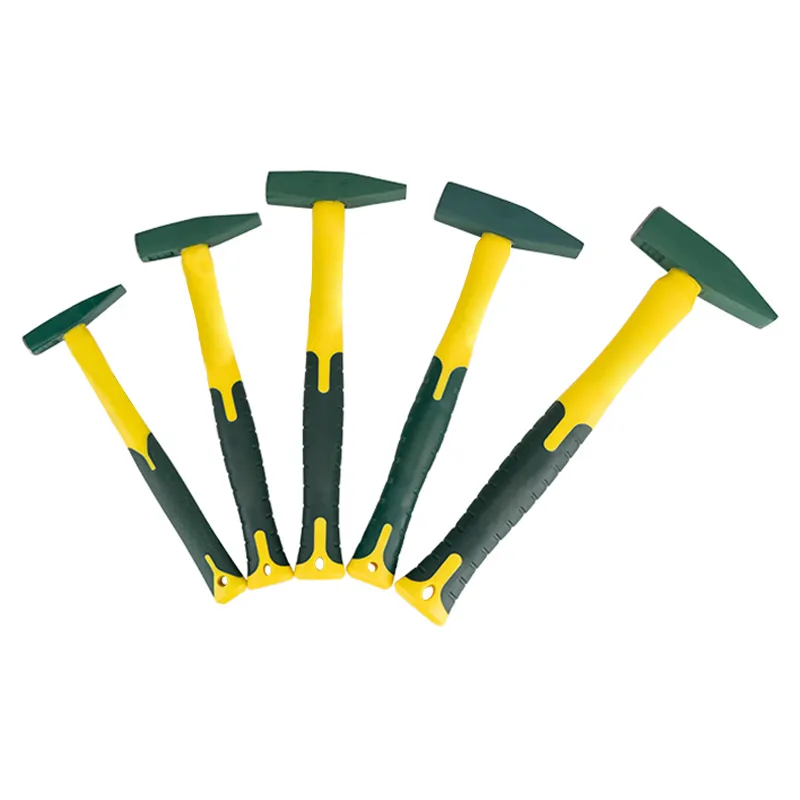 Professional High Quality Machinist's Hammer with Durable Fiberglass and Aluminum Handle Customizable OEM Support
- Engineer's Hammers+Carbon Steel+11 lb(4.99kg)
$1.87
MOQ: 499
About Industrial Heavy-Duty Hammers & Dead Blow Forming Mallets
Industrial striking tools perform indispensable mechanical functions across metal fabrication shops, roll forming production plants, and heavy steel erection projects. When calibrating roll forming roller stands, installing heavy machine foundation anchor bolts, or forming complex architectural sheet metal flashing, impact tools must deliver precisely modulated kinetic force without shattering, chipping, or damaging finished tooling surfaces. Applying standard hardened steel hammers directly to precision machined roll tooling causes catastrophic surface denting and micro-fracturing.
Our mechanical striking portfolio includes dead blow mallets engineered with steel-shot-filled head cavities. Upon impact, the loose steel pellets follow the stroke with a fraction-of-a-second delay, sustaining forward momentum and completely eliminating bounce-back rebound. Urethane and non-marring nylon faces allow technicians to tap precision tool steel roll rings, bearing housings, and polished profile rollers into position without surface galling or denting.
For heavy construction, our forged carbon steel hammers undergo differential induction heat treatment, producing a hardened striking face (HRC 50–55) that resists mushrooming, surrounded by a softer core and eye (HRC 30–35) that absorbs severe shock without brittle fracture. Fitted with multi-core fiberglass handles anchored by high-strength epoxy bonding, these striking tools strictly conform to DIN 1041, DIN 1193, and ASME B107.400 safety standards.
Applications
Roll Forming Tooling Shaft Dead Blow Mallet Precision Alignment
In roll forming tooling shaft dead blow mallet precision alignment, tooling technician using an orange polyurethane dead blow mallet to gently seat hardened Cr12MoV roll rings onto drive shafts without scratching precision surfaces. Precision-machined from vacuum-hardened alloy tool steel and mirror-polished with hard-chrome plating, these heavy tooling components withstand extreme forming pressures without galling.
Heavy Steel Structural Anchor Bolt Hammer Driving
In heavy steel structural anchor bolt hammer driving, construction ironworker driving heavy wedge anchor bolts into pre-drilled concrete footings with a drop-forged steel hammer on a building foundation. These high-strength self-drilling screws, blind rivets, and heavy anchor bolts provide rigid, vibration-resistant connections between metal framing and building foundations.
Architectural Sheet Metal Standing Seam Edge Hemming Hammering
In architectural sheet metal standing seam edge hemming hammering, sheet metal artisan using a high-density polyethylene forming mallet to hand-hem standing seam copper roof eaves over flashing edges. Featuring high-strength interlocking seams and concealed fastener clips, these continuous metal panels prevent water infiltration and ensure long-term building envelope integrity.
Foundry Machine Base Cast Iron Slag Removal Chipping Hammer
In foundry machine base cast iron slag removal chipping hammer, foundry worker using a pointed slag chipping hammer to clean heavy welded machine frames and slag scale inside a structural steel fabrication plant. Manufactured to rigorous industrial tolerances from high-grade structural alloys, these dependable components withstand demanding environmental stresses and deliver certified reliability.
Hazardous Environment Non-Sparking Copper Mallet Maintenance
In hazardous environment non-sparking copper mallet maintenance, maintenance mechanic using a solid forged copper non-sparking hammer to adjust flange bolts in an industrial petrochemical solvent coating area. These high-strength self-drilling screws, blind rivets, and heavy anchor bolts provide rigid, vibration-resistant connections between metal framing and building foundations.
Technical Overview
| Parameter | Information |
|---|---|
| Hammer Classifications | Dead Blow Shot-Filled Mallet, Forged Ball-Peen Hammer, Non-Sparking Copper Mallet, Sledge Hammer |
| Head Forging Metallurgy | Drop-Forged 1045 High Carbon Steel, Cast Polyurethane Urethane, Forged Copper Alloy |
| Hardness Specification | Striking Face HRC 50 – 55 / Core & Eye HRC 30 – 35 (differential heat treatment) |
| Handle Construction | Solid Core Fiberglass with Rubberized TPR Anti-Shock Grip / Grade A Hickory Wood |
| Head Weight Options | 8 oz (225 g), 16 oz (450 g), 32 oz (900 g), 48 oz (1350 g), 4 lb (1800 g) |
| Rebound Dampening Rating | Zero-rebound dead blow energy dampening via calibrated internal steel shot |
| Striking Face Profiles | Flat Crowned Rim, Hemispherical Ball Peen, Replaceable Threaded Nylon Faces |
| Overstrike Protection | Molded rubber neck collar protecting handle from damage during missed strikes |
| Pull-Off Joint Strength | Resists over 12 kN mechanical pull-out force exceeding ANSI safety requirements |
| Manufacturing Standards | DIN 1041, DIN 1193, DIN 7226, ASME B107.400, GS Certified Safety Production |
FAQ
How does a steel-shot dead blow mallet eliminate bounce-back rebound?
The internal cavity is partially filled with loose steel shot that shifts forward upon impact, absorbing rebound energy and sustaining forward driving force without bouncing back off the workpiece.
Why are non-marring polyurethane mallets essential for roll forming tooling setup?
Polyurethane faces absorb surface shocks without denting, scratching, or chipping hardened tool steel roll dies and polished rollers, preserving delicate profile geometries.
What is the purpose of differential heat treatment on forged steel hammer heads?
The striking face is hardened (HRC 50–55) to prevent deformation and mushrooming, while the eye and core remain ductile (HRC 30–35) to absorb severe shock and prevent catastrophic brittle head fracture.
When should non-sparking copper or brass hammers be specified?
Non-sparking copper, brass, or copper-beryllium hammers must be used in explosive or flammable atmospheres—such as chemical plants and paint lines—where a steel spark could ignite vapors.
What are the advantages of a fiberglass handle over traditional hickory wood?
Fiberglass handles offer up to ten times greater overstrike resistance than wood, will not shrink or loosen in humid climates, and feature rubberized dampening grips that reduce vibration transfer to the user's wrist.
What is the difference between a ball-peen hammer and a cross-peen hammer?
Ball-peen hammers feature a hemispherical head for riveting and expanding metal pins, while cross-peen hammers feature a wedge-shaped peen for drawing out and bending sheet metal edges.
How does an epoxy-bonded handle joint enhance job site safety?
High-strength aerospace epoxy fills the entire tapered eye cavity, creating a permanent chemical and mechanical bond that withstands over 10 kN of pull-out force, preventing loose heads from flying off.