Global B2B Roll Forming Sourcing Platform | Free RFQ Response within 24h

- Tuo AI

- Live

- My Account
- Shopping Cart
- Inquiry Basket
- Contact Us
- Back to Top




Cable Tray Installation Hardware, Strut Fittings & Conduits
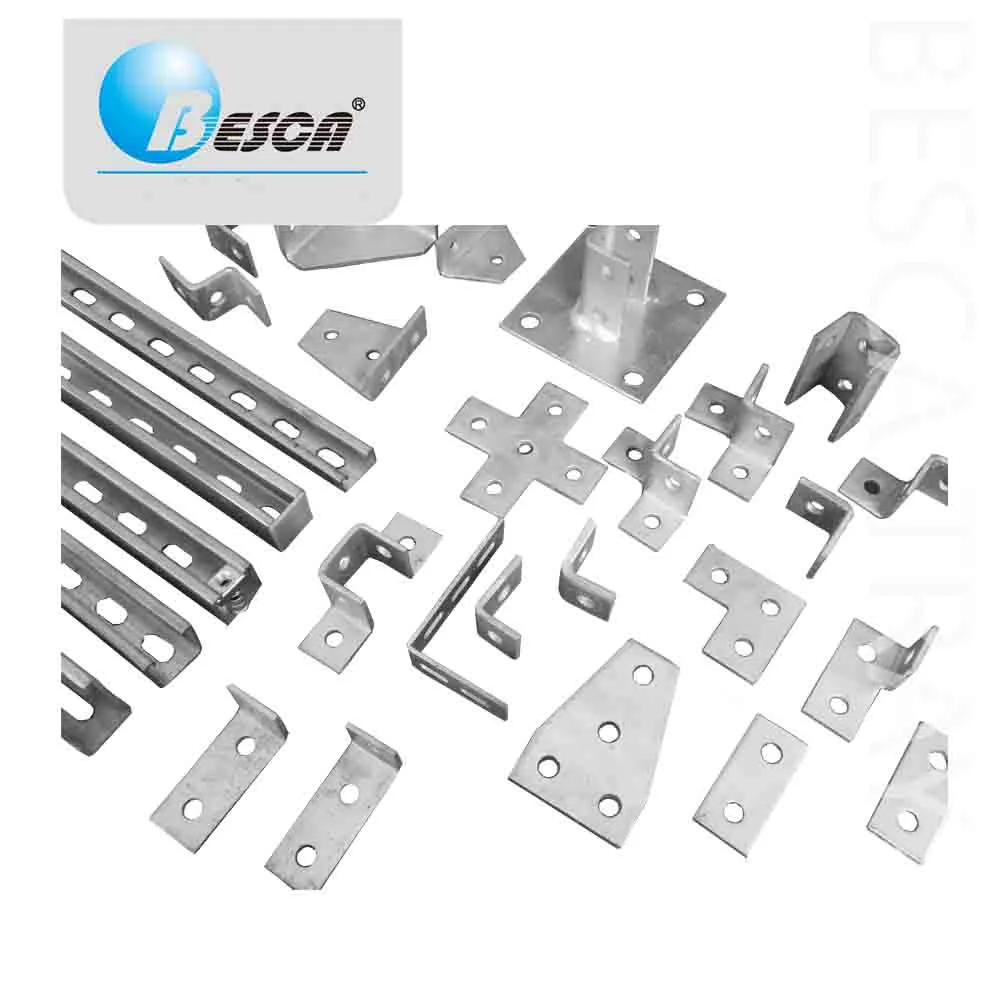
Cable tray installation hardware, modular strut fittings, structural base plates, and rigid metallic conduits provide the essential mechanical mounting stability, horizontal and vertical trajectory transitions, seismic bracing rigidity, and secondary cable physical protection across commercial and industrial raceway installations. Encompassing heavy-gauge channel U-fittings, four-hole structural base plates, pre-punched straight and variable angle splice plates, threaded rod ceiling trapeze hangers, rigid metal electrical conduits (RMC/IMC), and grounding continuity jumpers, our accessory portfolio guarantees fast, secure, and code-compliant cable tray erection conforming to NEMA VE 1 and NEC standards.
Filters
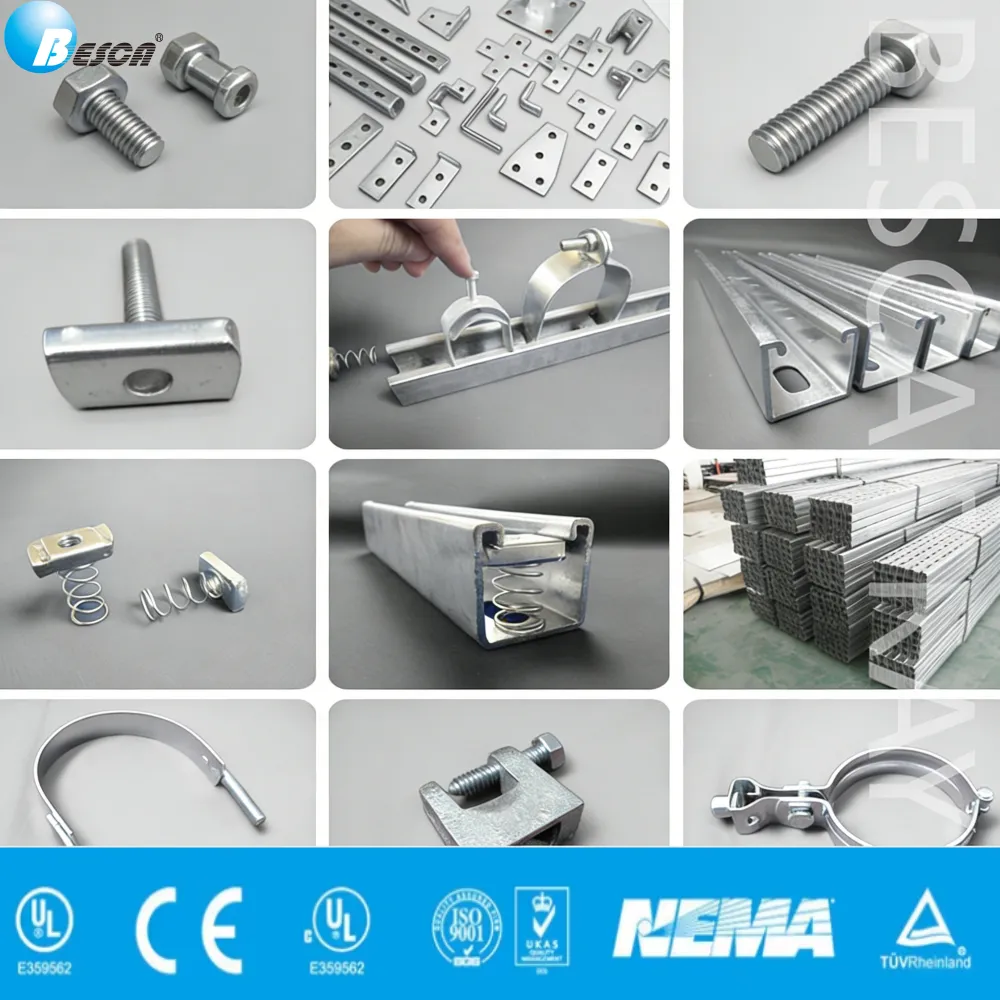 High-Quality Galvanized Steel Cable Tray Fittings Seismic Bracing Accessories Corrosion-Resistant for Electrical Wiring Support
- Jiangsu, China+BSC-BS+Besca+Coated With Anti-Corrosion Paint, Hot-Dip Galvanized, Passivated, Pre-Galvanized+Fitting and clamp
$3.50
MOQ: 1
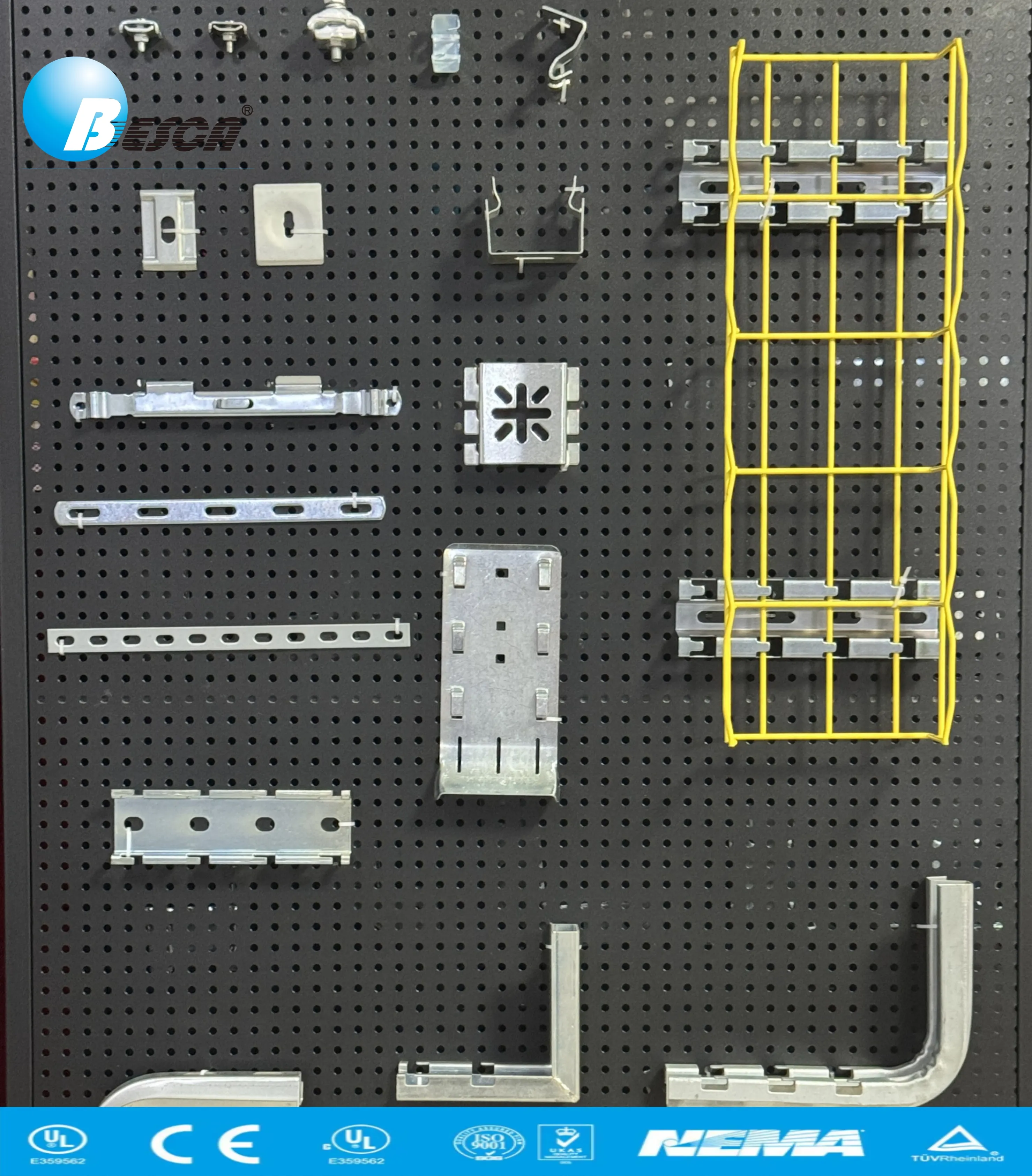 High-quality Galvanized Steel Cable Tray Fittings Seismic Bracing Secure Long-Lasting Support for Electrical & Mechanical System
- Jiangsu, China+BSC-BS+Besca+Coated With Anti-Corrosion Paint, Hot-Dip Galvanized, Passivated, Pre-Galvanized+Fitting and clamp
$3.50
MOQ: 1
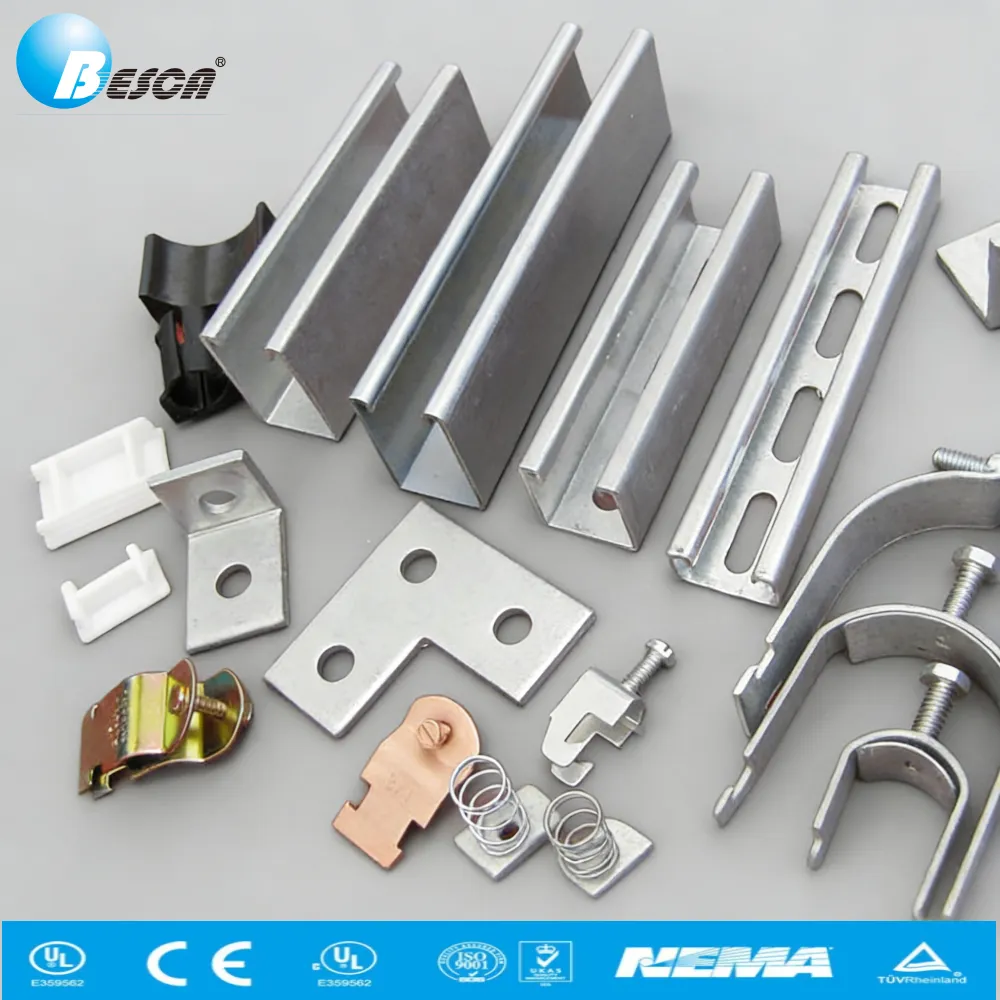 Galvanized Steel Cable Tray Accessories Heavy-Duty Pipe Clamps Brackets and Connectors for Industrial Electrical
- Jiangsu, China+BSC-BS+Besca+Coated With Anti-Corrosion Paint, Hot-Dip Galvanized, Passivated, Pre-Galvanized+Fitting and clamp
$3.50
MOQ: 1
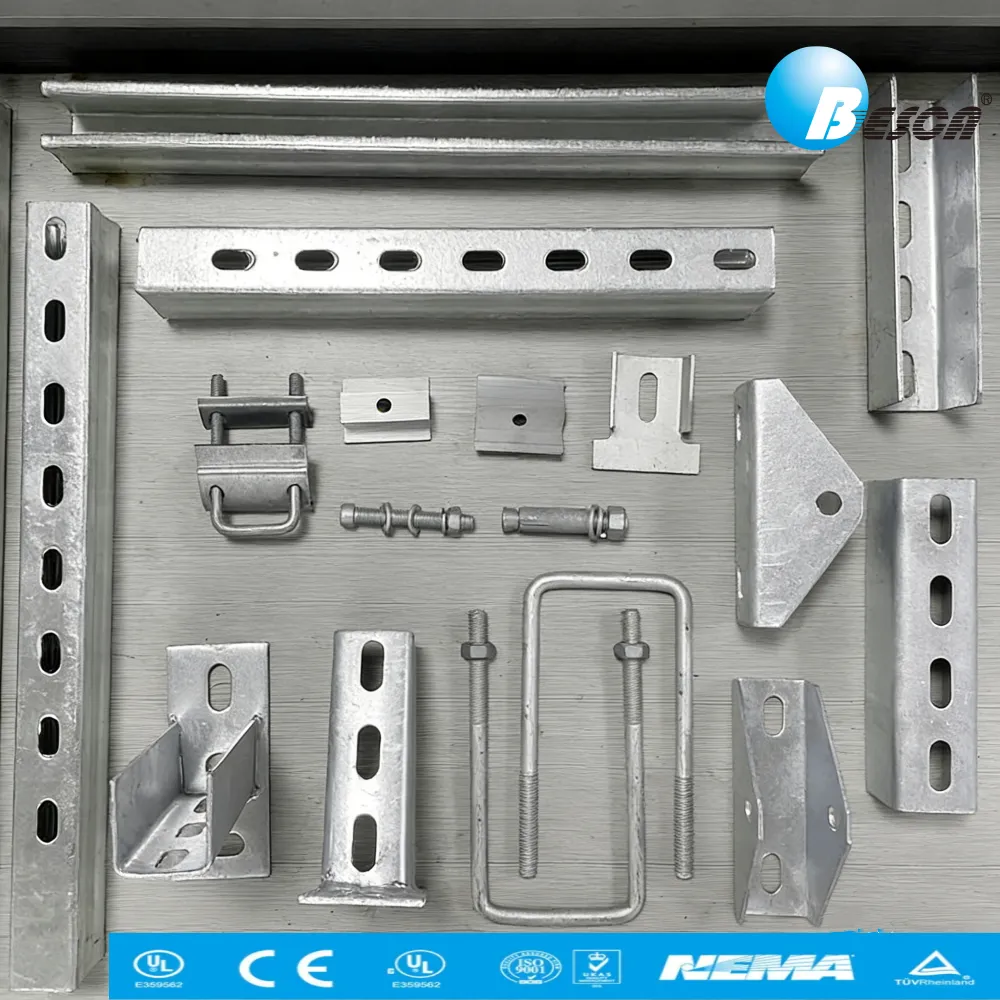 Corrosion-Resistant Cable Tray Fittings: Essential Brackets & Clamps for Commercial & Data Center Installations
- Jiangsu, China+BSC-BS+Besca+Coated With Anti-Corrosion Paint, Hot-Dip Galvanized, Passivated, Pre-Galvanized+Fitting and clamp
$3.50
MOQ: 1
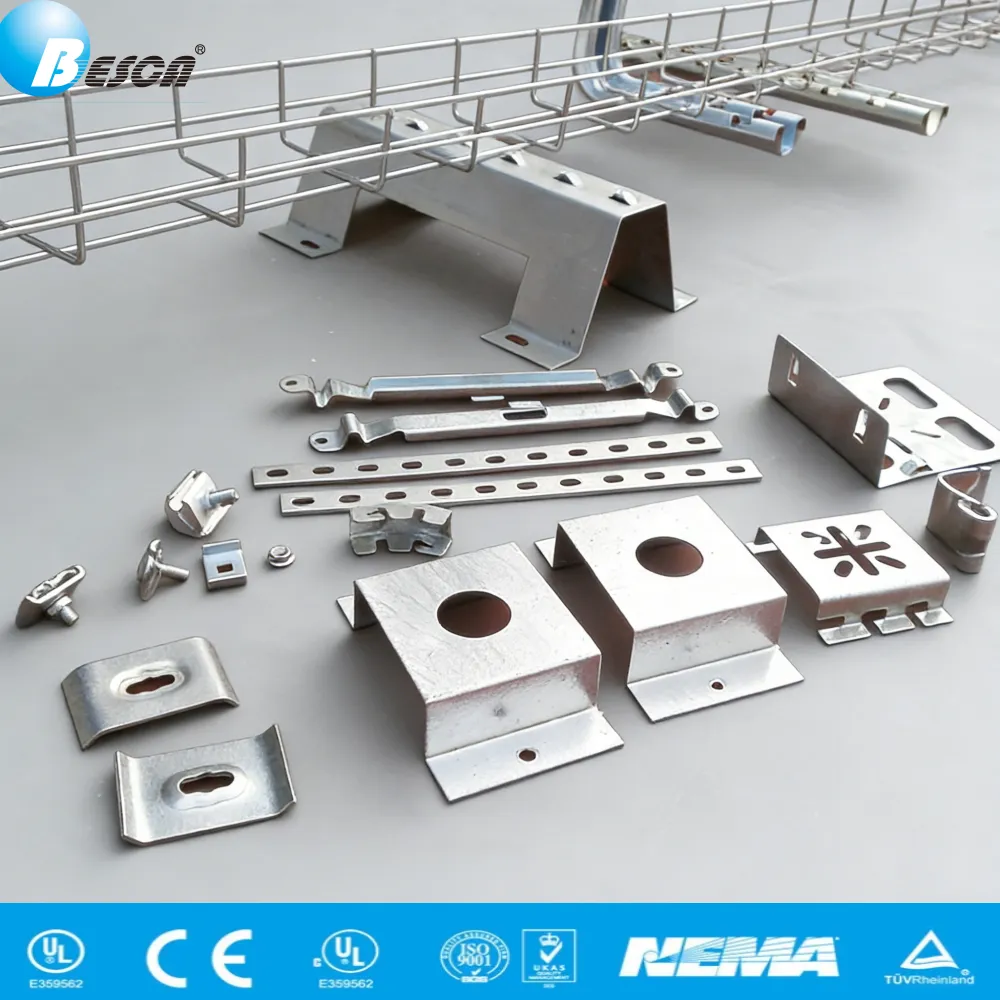 Durable Galvanized Steel Cable Tray Accessories: Secure Long-Lasting Support for Electrical & Mechanical Systems
- Jiangsu, China+BSC-BS+Besca+Coated With Anti-Corrosion Paint, Hot-Dip Galvanized, Passivated, Pre-Galvanized+Fitting and clamp
$3.50
MOQ: 1
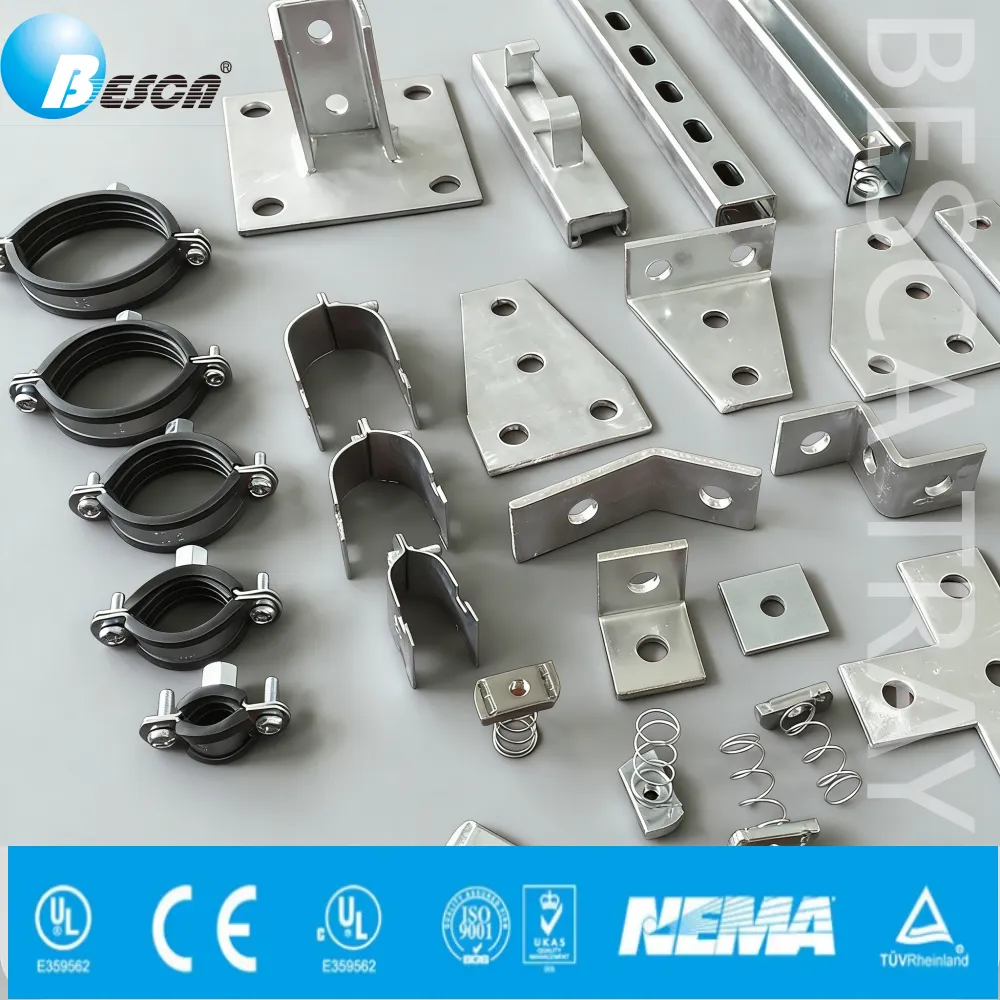 Cable Tray Accessories Connectors Metal Bracket Wire Duct Electrical Conduit Strut Clamp Pipe Clamp Tube Clip
- Jiangsu, China+BSC-BS+Besca+Coated With Anti-Corrosion Paint, Hot-Dip Galvanized, Passivated, Pre-Galvanized+Fitting and clamp
$3.50
MOQ: 1
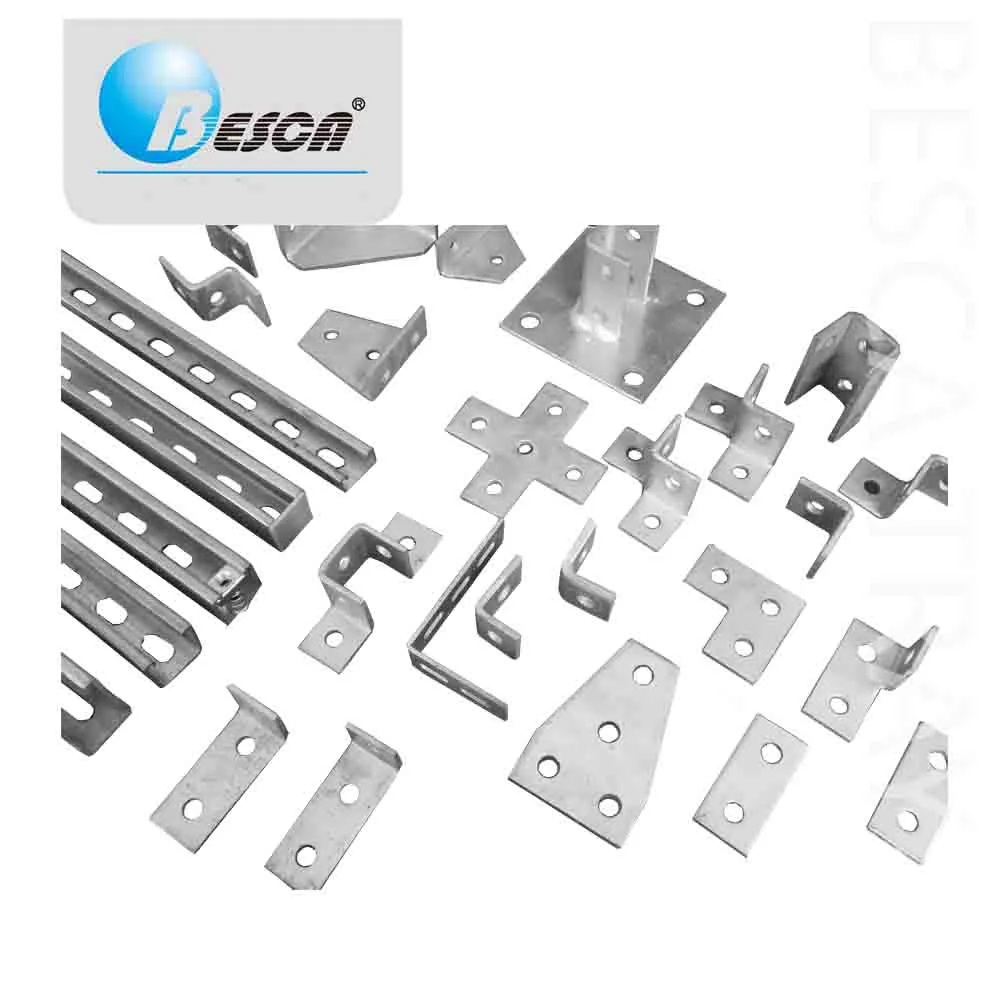 Cable Connectors Metal Bracket Price Wire Duct
- Jiangsu, China+BSC-BS+Besca+2m(6.5ft),2.44m (8 ft), 3m (10 ft)+50-400 mm
$3.20
MOQ: 1
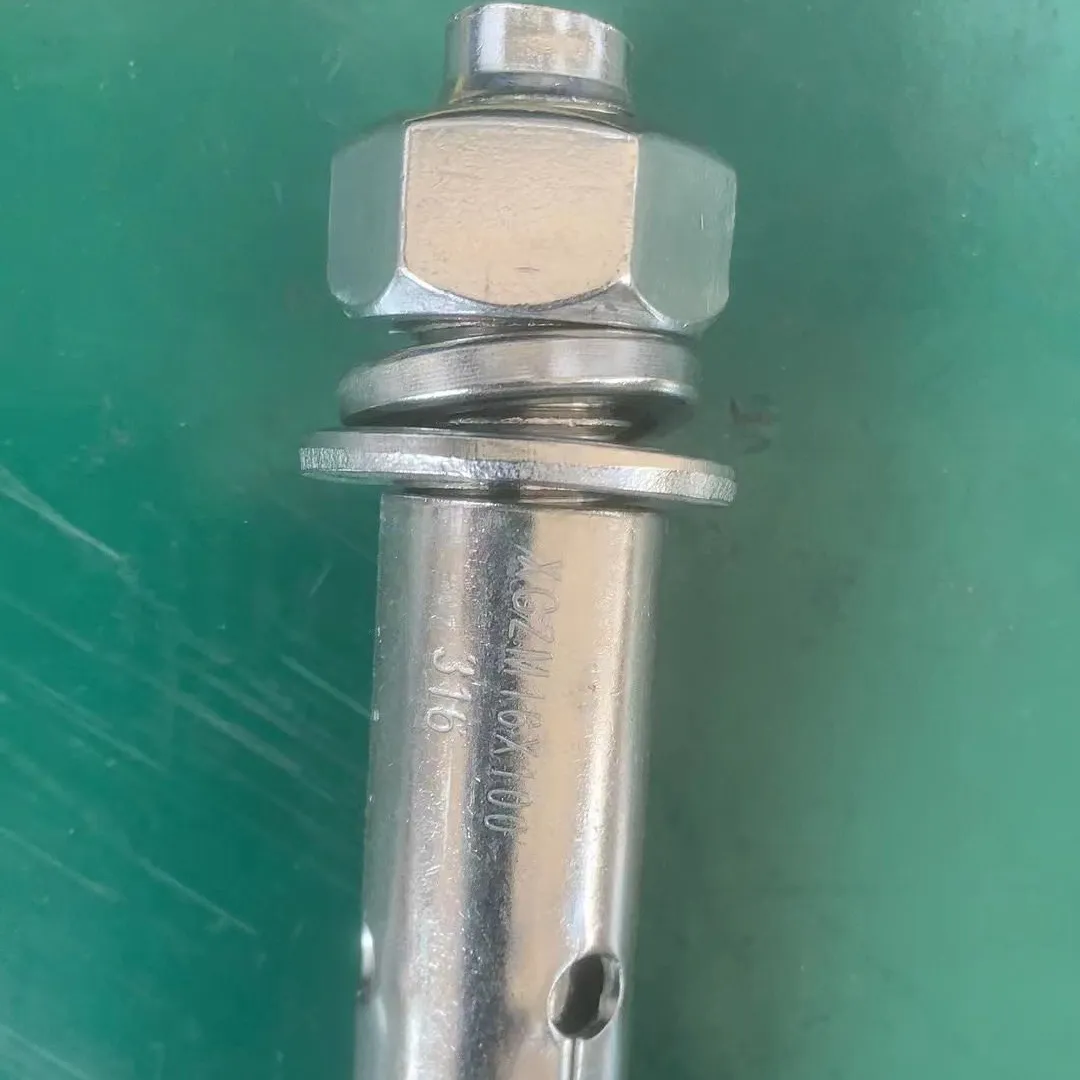 Cable Tray Accessories Thread Rods for Unistrut Channel
- Jiangsu, China+BSC-BS+Besca+2m(6.5ft),2.44m (8 ft), 3m (10 ft)+50-400 mm
$1.20
MOQ: 1
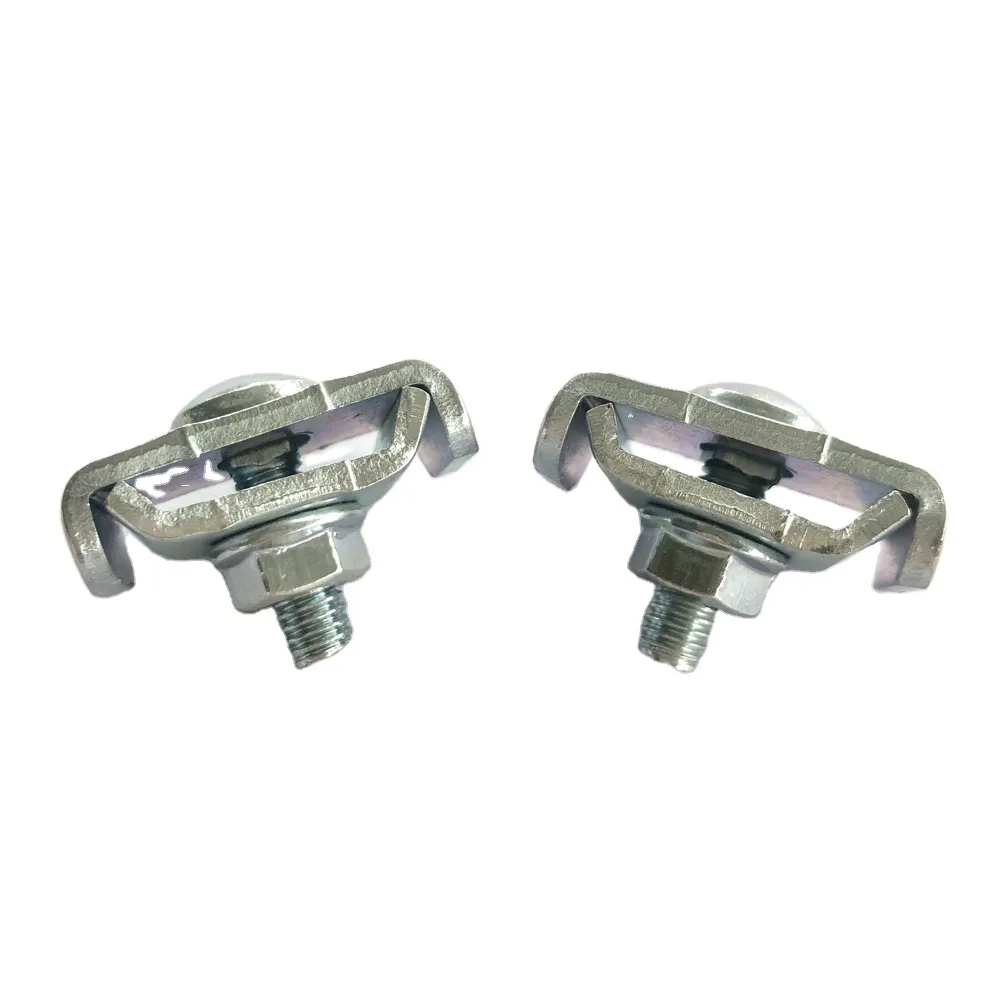 BESCA Aluminum Profile Factory Price Steel Strut Channel Spring Nut Carbon Steel Galvanized Channel
- Jiangsu, China+BSC-BS+Besca+2m(6.5ft),2.44m (8 ft), 3m (10 ft)+50-400 mm
$6.80
MOQ: 1
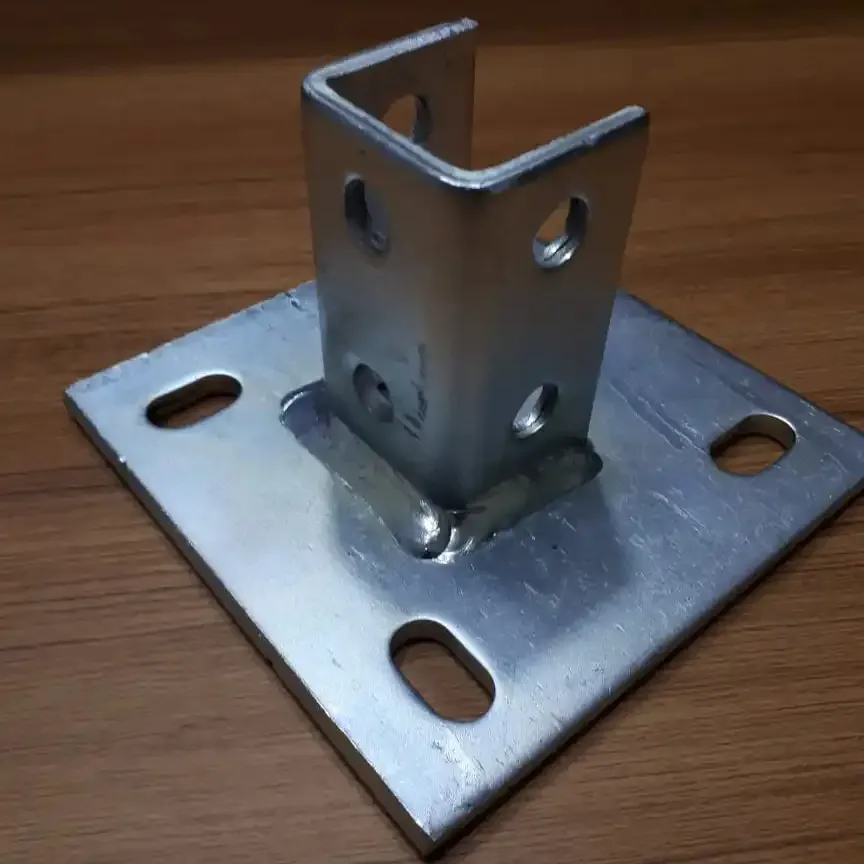 Cable Tray Accessories Thread Rods for Unistrut Channel
- Jiangsu, China+BSC-BS+Besca+2m(6.5ft),2.44m (8 ft), 3m (10 ft)+50-400 mm
$0.30
MOQ: 1
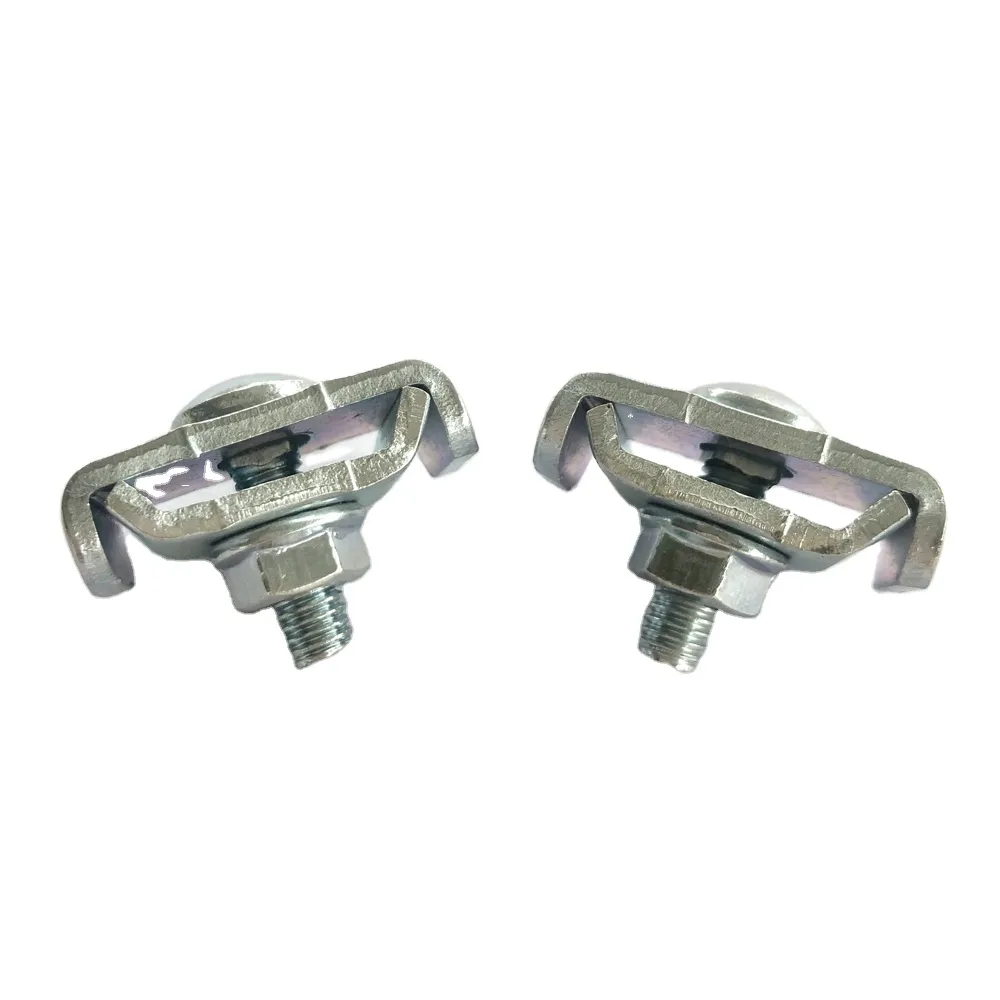 BESCA Fasteners Manufacturers Bolts Nuts Industrial Metal Building Sprung Nut
- Jiangsu, China+BSC-BS+Besca+2m(6.5ft),2.44m (8 ft), 3m (10 ft)+50-400 mm
$6.80
MOQ: 1
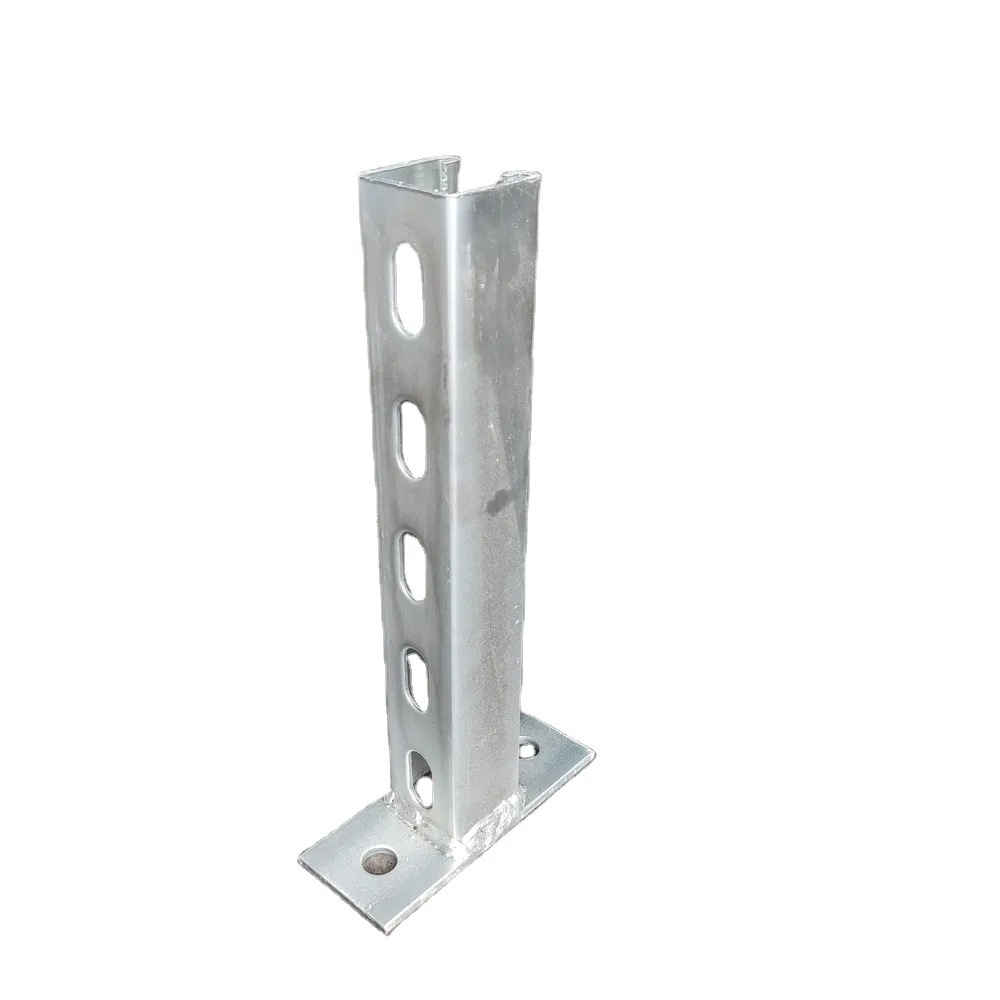 Indoor Strut Channel Slotted Unistrut Channel Cable Tray
- Jiangsu, China+BSC-BS+Besca+2m(6.5ft),2.44m (8 ft), 3m (10 ft)+50-400 mm
$1.50
MOQ: 1
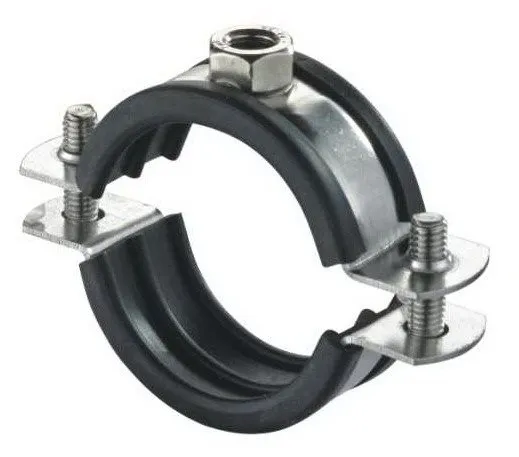 Cable Tray Accessories Thread Rods for Unistrut Channel
- Jiangsu, China+BSC-BS+Besca+2m(6.5ft),2.44m (8 ft), 3m (10 ft)+50-400 mm
$6.80
MOQ: 1
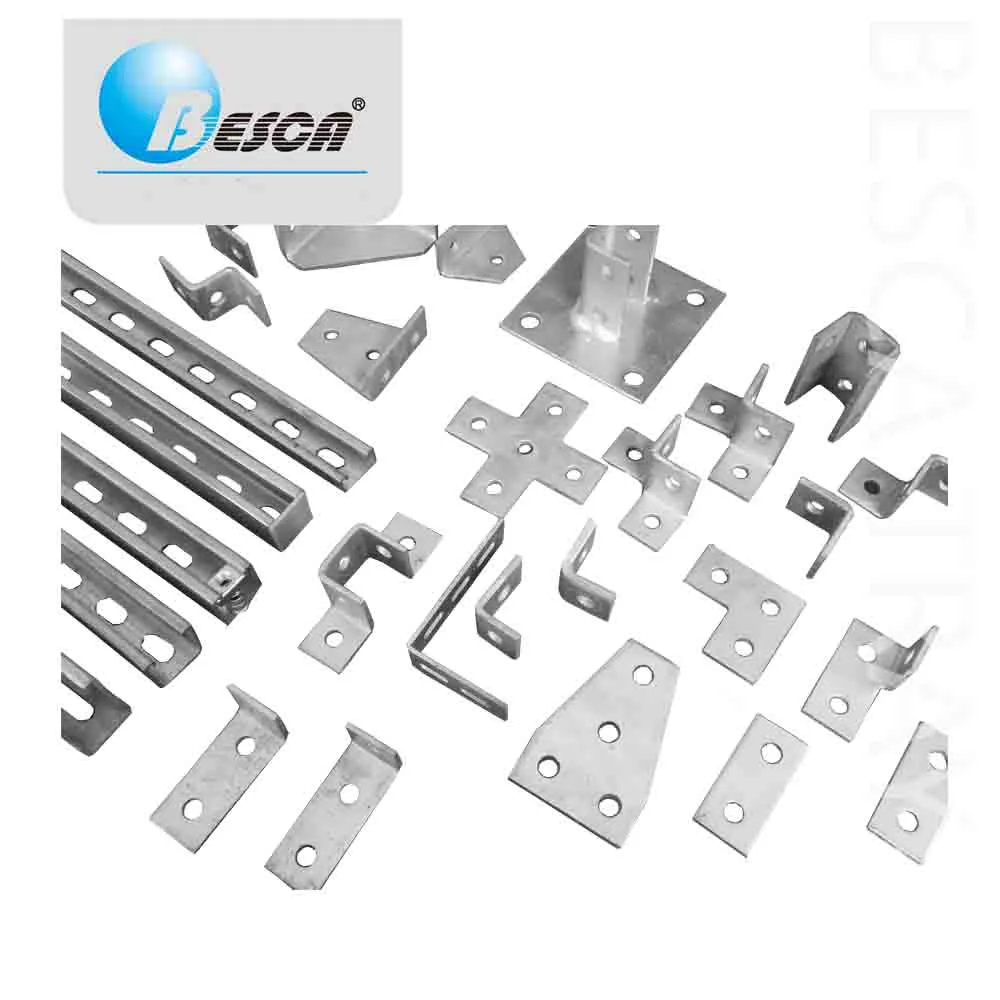 Besca Supplier Stainless Steel Strut Channel Clamp Cable Assemblies
- Jiangsu, China+BSC-BS+Besca+2m(6.5ft),2.44m (8 ft), 3m (10 ft)+50-400 mm
$6.50
MOQ: 1
 HDG Base Plate U Base Fittings for C Channel Strut Channel Installation
- Jiangsu, China+BC+BESCA+2m(6.5ft),2.44m (8 ft), 3m (10 ft)+base on size
$10.00
MOQ: 100
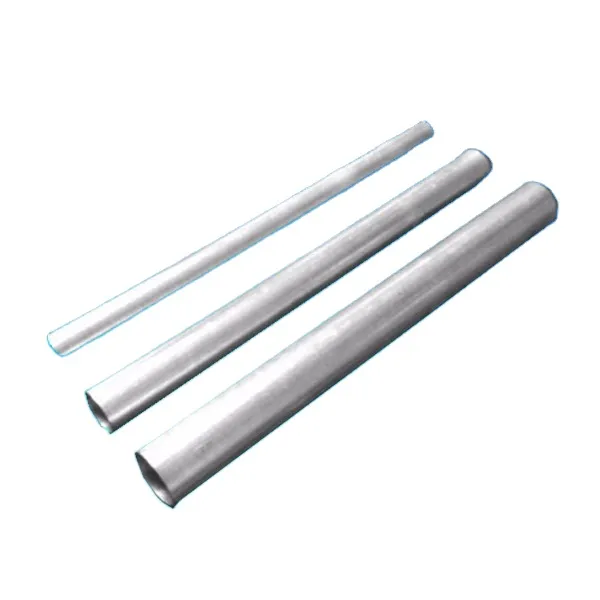 For UL Certified CE Standard Electrical Conduit Steel Material
- Jiangsu, China+BSC-BC+Besca+Rigid, Flexible, Fire Retardant, Halogen Free+Besca
$2.00
MOQ: 100
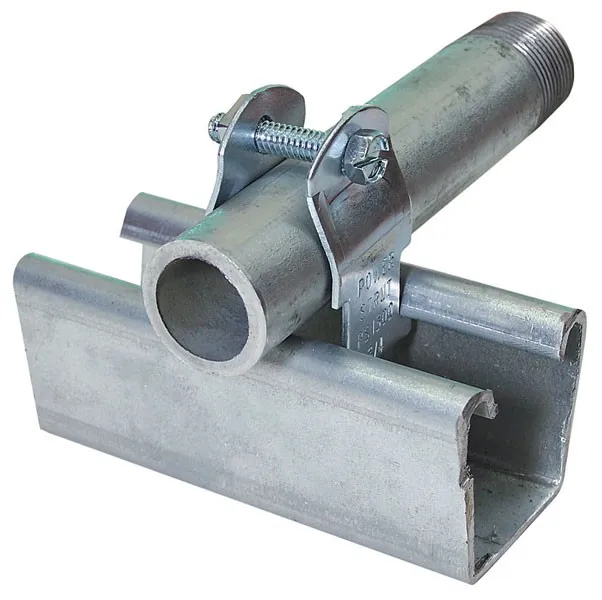 Electrical Conduit EMT Channel Conduit and CE Standard
- Jiangsu, China+BSC-BC+Besca+Besca+Besca Industrial and more than 5000 square meters
$2.00
MOQ: 100
 Electrical Conduit Strut Clamp/Pipe Clamp/Tube Clip
- Jiangsu, China+BSC-BS+Besca+Electrical Conduit Strut Clamp/Pipe Clamp/Tube Clip+Silver,Black,White,Orange
$2.50
MOQ: 1
About Cable Tray Installation Hardware, Strut Fittings & Conduits
Modular cable tray support hardware, engineered strut channel fittings, and metallic raceway accessories constitute the indispensable installation toolkit enabling electrical contractors to construct durable, code-compliant, and reconfigurable cable routing networks across complex industrial architectural layouts. Because cable pathways must navigate around structural building columns, HVAC ductwork, and process piping while supporting dynamic cable weight without sagging or uncoupling, heavy-duty structural fittings and precision hardware dictate the physical safety of the entire electrical installation.
Our consumables and accessories portfolio spans five critical installation categories: modular strut fittings (including high-strength channel U-fittings, angle brackets, flat splice plates, and tee connectors engineered from 6 mm drop-forged steel with 14 mm mounting holes matching standard M10/M12 spring channel nuts); structural base plates (heavy 6 mm to 8 mm thick four-hole and two-hole post base plates providing secure anchor bolt mounting onto concrete floors and steel beams); tray splice and transition hardware (pre-punched wrap-around side rail splice plates, horizontal pivot hinges, and vertical adjustable riser plates for elevation changes); suspension trapeze hangers (all-thread M10/M12 drop rods, beam clamps, and vibration-resistant locknuts); and metallic raceways (rigid metal conduit and intermediate metal conduit providing physical protection for terminal drop cables).
Finished in electro-galvanized (ASTM B633), heavy post-weld hot-dip galvanized (ASTM A153), or marine-grade 316 stainless steel, all fittings withstand severe outdoor industrial environments without corrosion. Engineered for rapid bolted assembly without on-site welding, our cable tray hardware delivers maximum installation productivity and long-term mechanical reliability worldwide.
Applications
Heavy-Duty Steel Base Plate Floor Bolting for Strut Channel Stanchions
In heavy-duty steel base plate floor bolting for strut channel stanchions, technician using an impact wrench to torque M12 concrete wedge anchor bolts through a heavy 4-hole galvanized base plate securing a strut stanchion. Engineered with specialized corrosion-resistant surface coatings and precision-machined threads, these high-tensile fasteners resist dynamic shear stresses and cyclic vibrations.
Electro-Galvanized Splice Plate Bolting on Cable Tray Side Rails
In electro-galvanized splice plate bolting on cable tray side rails, electrician fastening a heavy 8-hole splice connection plate joining two adjacent 400mm perforated cable tray side rails with serrated flange bolts. These rigid galvanized and stainless steel cable pathways provide superior structural span capacity, facilitate heat dissipation, and support high-voltage power networks.
Rigid Metal Electrical Conduit Bending and Coupling Installation
In rigid metal electrical conduit bending and coupling installation, electrician using a hydraulic conduit bender to form an accurate offset bend in a 2-inch galvanized rigid metal conduit connected to an overhead tray. Built for heavy industrial service, these precision-engineered components resist mechanical wear and environmental corrosion, maintaining structural alignment and building performance.
Threaded Rod Ceiling Drop Trapeze Hanger Assembly for Cable Trays
In threaded rod ceiling drop trapeze hanger assembly for cable trays, suspended trapeze hanger consisting of a slotted strut channel crossbar supported by dual M12 zinc-plated threaded drop rods anchored to concrete ceiling. Engineered with smooth edges and ventilation patterns, these modular cable raceways prevent insulation damage and ensure continuous electrical earth bonding.
Copper Earth Bonding Jumper Cable Clamping Across Tray Expansion Joints
In copper earth bonding jumper cable clamping across tray expansion joints, installer bolting a flexible braided copper bonding jumper strap across an expansion gap between two aluminum cable ladder sections. These high-strength self-drilling screws, blind rivets, and heavy anchor bolts provide rigid, vibration-resistant connections between metal framing and building foundations.
Technical Overview
| Parameter | Information |
|---|---|
| Accessory Classifications | Strut U-Fittings, Column Base Plates, Splice Plates, Trapeze Hangers, Metal Conduits |
| Fitting Material & Metallurgy | High-Strength Structural Steel (ASTM A1011 SS Grade 33 / Q235B) & Stainless 316 |
| Fitting Plate Thickness | Standard 6.0 mm (1/4") & Heavy-Duty 8.0 mm (5/16") Drop-Forged Steel Construction |
| Bolt Hole Dimensions | Standard 14 mm (9/16") Diameter Holes Spaced on Standard 48 mm (1-7/8") Centers |
| Surface Corrosion Finish | Electro-Galvanized (ASTM B633), Hot-Dip Galvanized (ASTM A153), Stainless Steel 316 |
| Base Plate Configurations | Single-Channel, Double-Channel Two-Hole & Four-Hole Column Floor Base Plates |
| Tray Splice Hardware | Straight Splice Plates, Horizontal Expansion Splices, 0–90° Vertical Adjustable Hinges |
| Conduit Standard Types | Rigid Metal Conduit (RMC) & Intermediate Metal Conduit (IMC) Conforming to UL 6 |
| Fastener Hardware Specs | Grade 8.8 Hex Head Bolts, Serrated Flange Nuts, M10/M12 Strut Spring Channel Nuts |
| Manufacturing Standards | NEMA VE 1, NEC Article 392, MFMA-4 (Metal Framing), ASTM A153, ISO 9001:2015 Certified |
FAQ
How do modular strut channel U-fittings and spring nuts accelerate cable tray installation?
U-fittings wrap around 41x41 mm strut channels and lock firmly using spring channel nuts; when tightened, the nut's hardened serrated grooves bite into the inward rolled channel lips, creating a rigid slip-resistant mechanical joint without drilling or welding.
Why are four-hole heavy structural base plates required for floor-mounted cable tray stanchions?
Four-hole 6 mm thick steel base plates distribute cantilever bending moments and vertical cable loads across heavy M12 wedge anchor bolts into concrete floors, preventing column rocking, tipping, and seismic displacement.
What is the function of adjustable vertical splice hinge plates on cable tray runs?
Vertical adjustable splice plates feature pivot pins and arc slots that allow installers to adjust vertical elevation angles from 0 to 90 degrees in the field, accommodating changes in ceiling height and clearing overhead obstructions without custom fabricated elbows.
Why is hot-dip galvanizing (ASTM A153) superior for outdoor cable tray mounting fittings?
Hot-dip galvanizing deposits a heavy metallurgical zinc coating (>65 microns) over all sheared edges, bolt holes, and weld seams, providing cathodic sacrificial corrosion protection that outlasts thin electroplating by decades in marine and industrial atmospheres.
How do rigid metal electrical conduits (RMC) interface with overhead cable tray systems?
Conduits exit cable trays via tray-to-conduit clamp adapters, routing individual power and control circuits from the overhead master tray down structural columns into electrical switchgear, junction boxes, and machinery control cabinets with full mechanical protection.
What safety factor governs ceiling trapeze hangers and drop rods supporting cable trays?
Engineered trapeze hangers adhere to minimum 5:1 ultimate safety factors conforming to MSS SP-58 and NEMA VE 1, ensuring threaded drop rods and channel crossbeams comfortably support full cable load plus accidental maintenance shock loads.
Why are serrated flanged nuts and lock washers mandatory on cable tray splice connections?
Serrated flange nuts bite into the galvanized coating of splice plates upon torquing, preventing fastener loosening caused by continuous thermal expansion cycles and building vibrations, while maintaining low-resistance electrical grounding continuity.